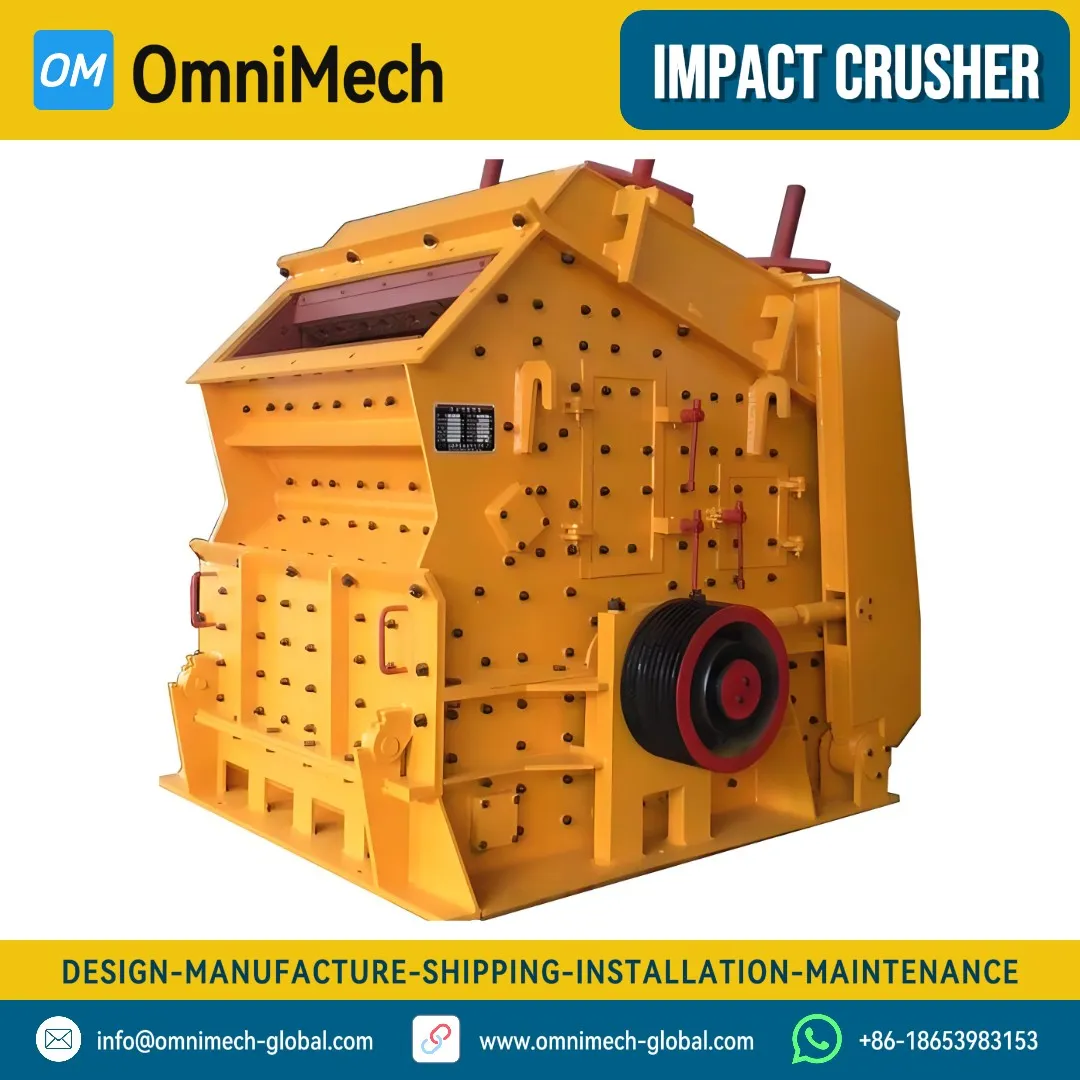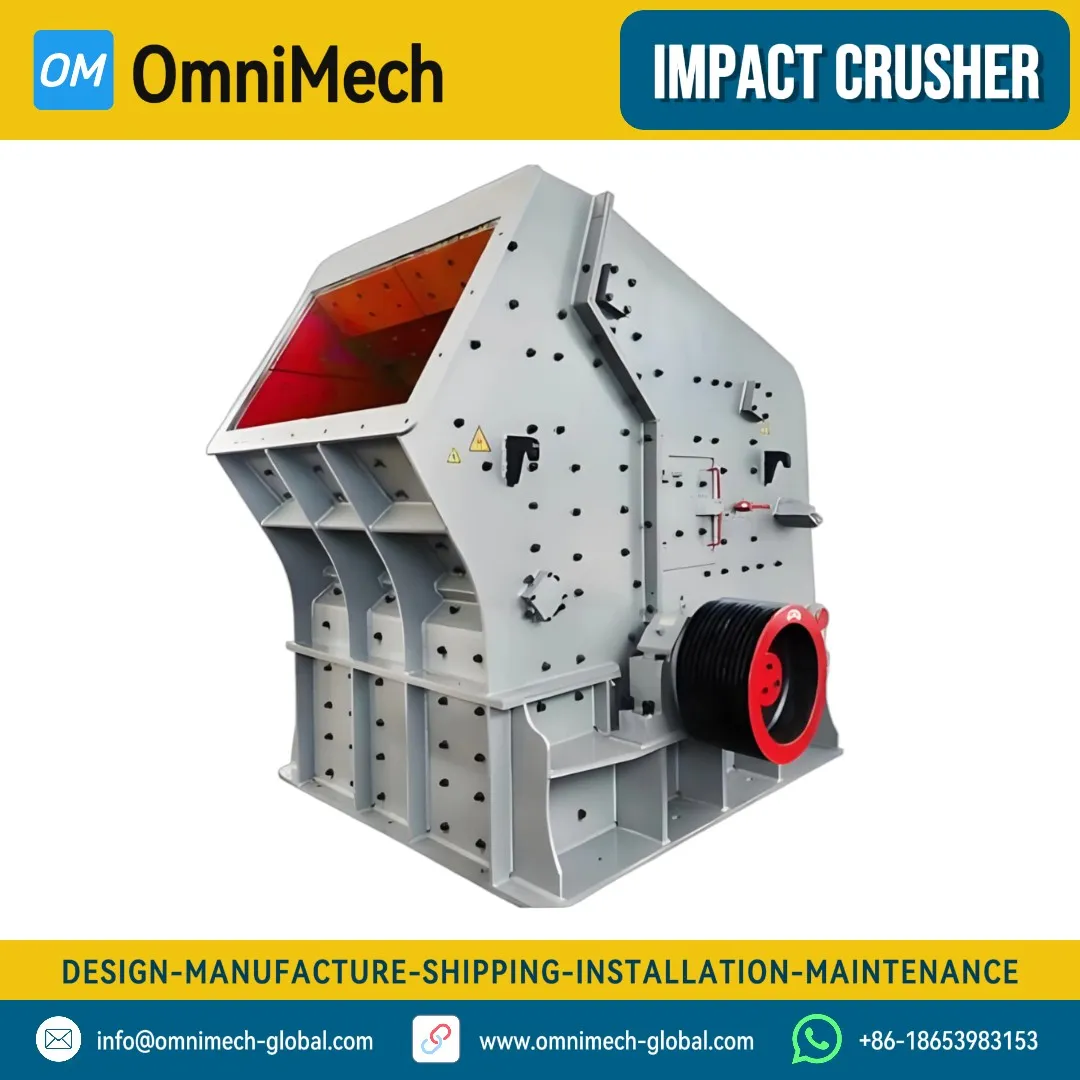
Impact Crusher Selection Guide: From Material Characteristics to Model Matching
OmniMech Engineering Team
omnimech Team
Why Proper Selection Matters
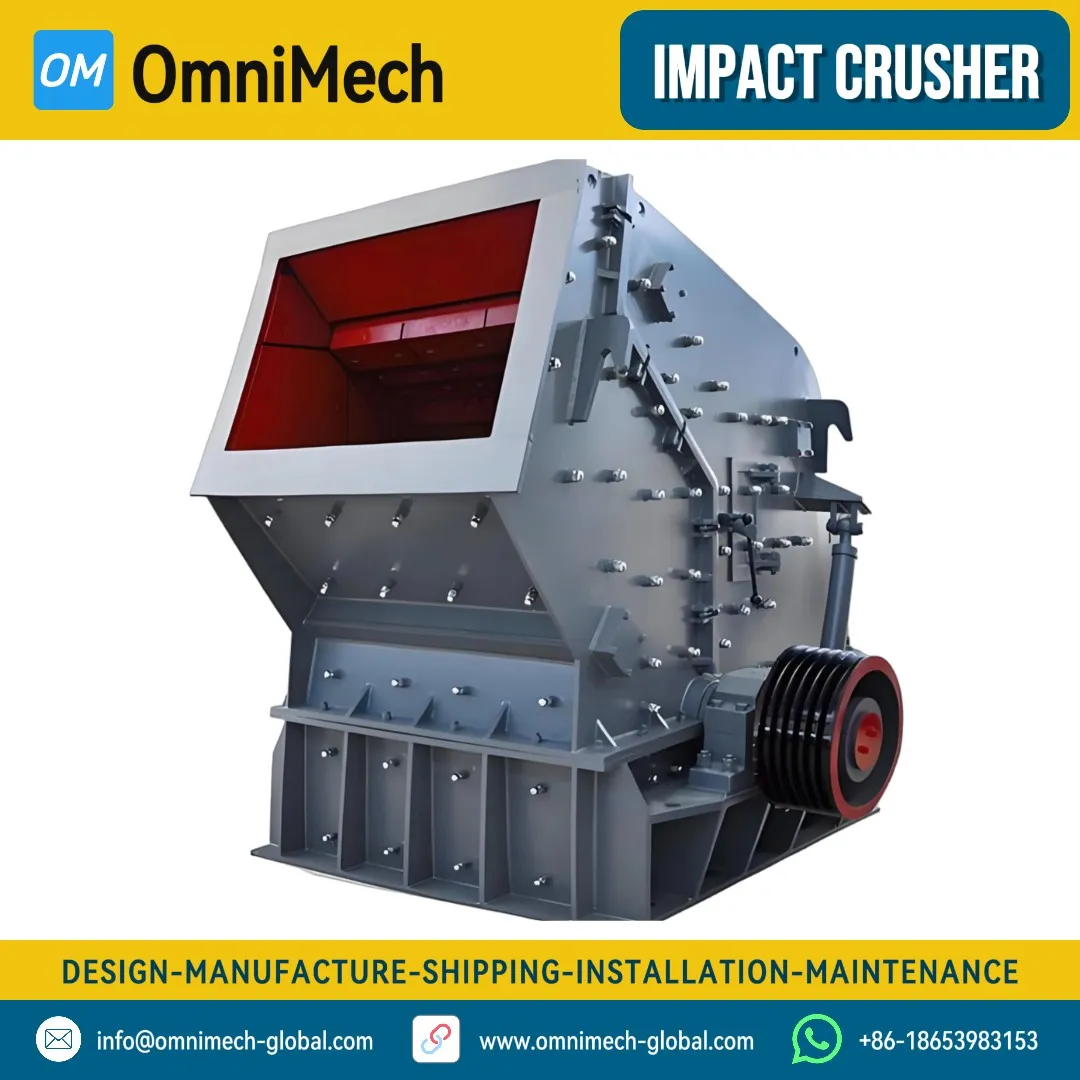
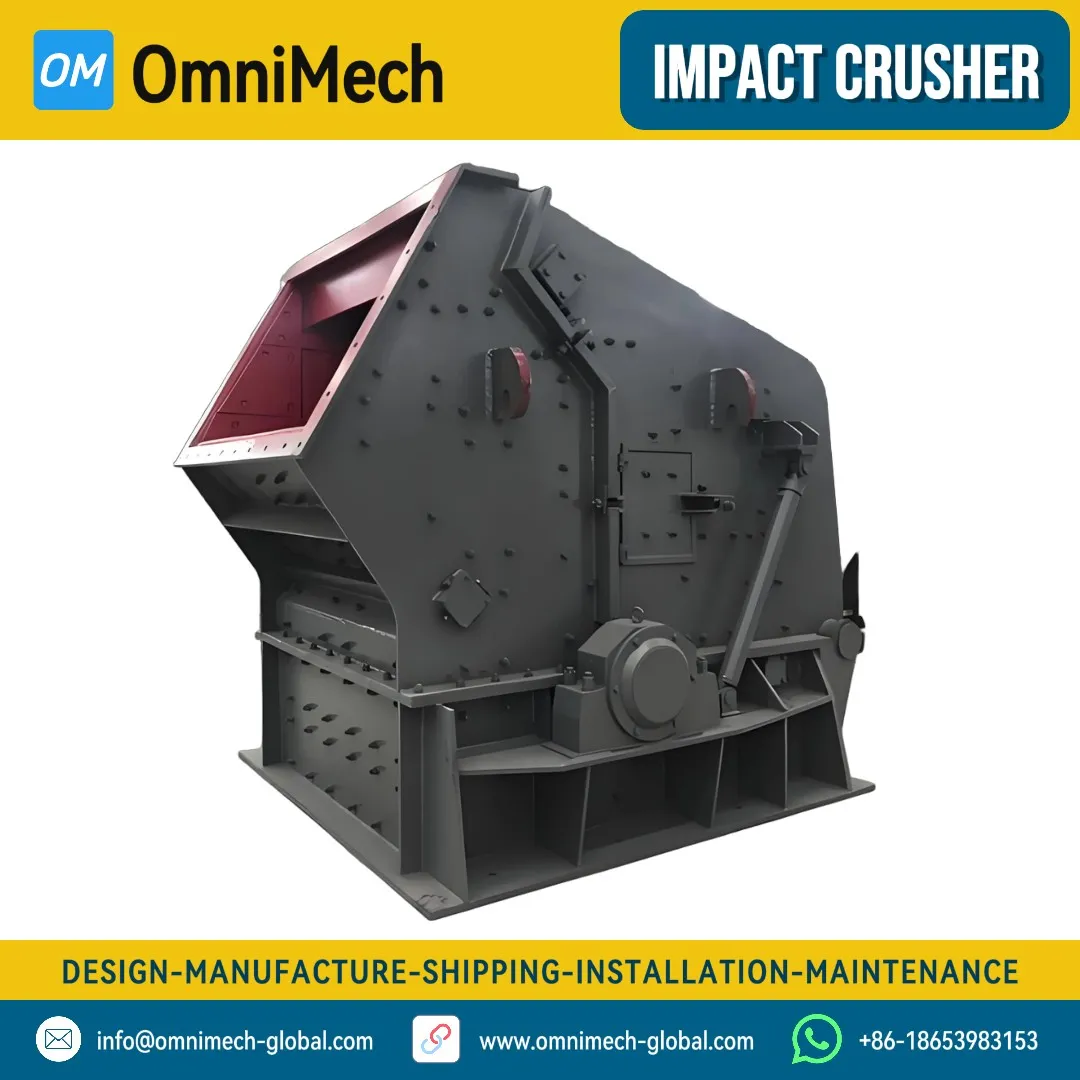
The Horizontal Shaft Impact (HSI) crusher is the core equipment for secondary fine crushing and shaping in aggregate production lines. Get the selection right, and your entire line delivers ample capacity, excellent product shape, and controlled operating costs. Get it wrong, and you face underperformance, excessive blow bar wear, frequent breakdowns, and a bottlenecked production line.
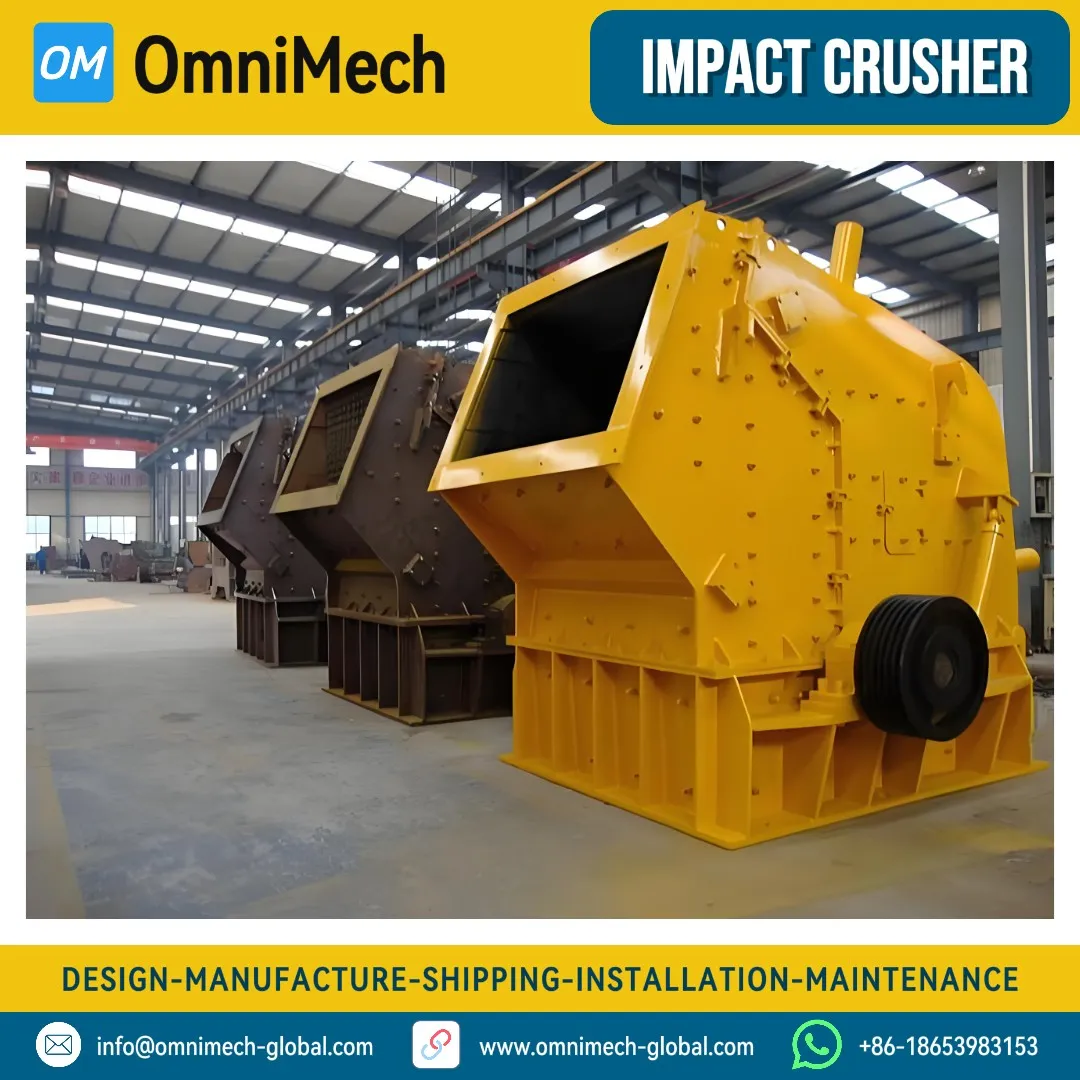
This guide provides a practical engineering methodology across five dimensions: working principles, selection parameters, blow bar materials, application scenarios, and model recommendations.
How Impact Crushers Work
Unlike jaw or cone crushers that rely on compression, impact crushers use high-speed impact for size reduction.
The motor drives the rotor at high speed (peripheral velocity typically 30-40 m/s). Blow bars mounted on the rotor accelerate incoming material and hurl it against the impact plates mounted inside the crusher housing. The material fractures along its natural cleavage planes under the intense impact force. Fractured material then rebounds, getting struck again by the blow bars or colliding with subsequent feed particles — undergoing 3-5 successive impacts before exiting the discharge opening.
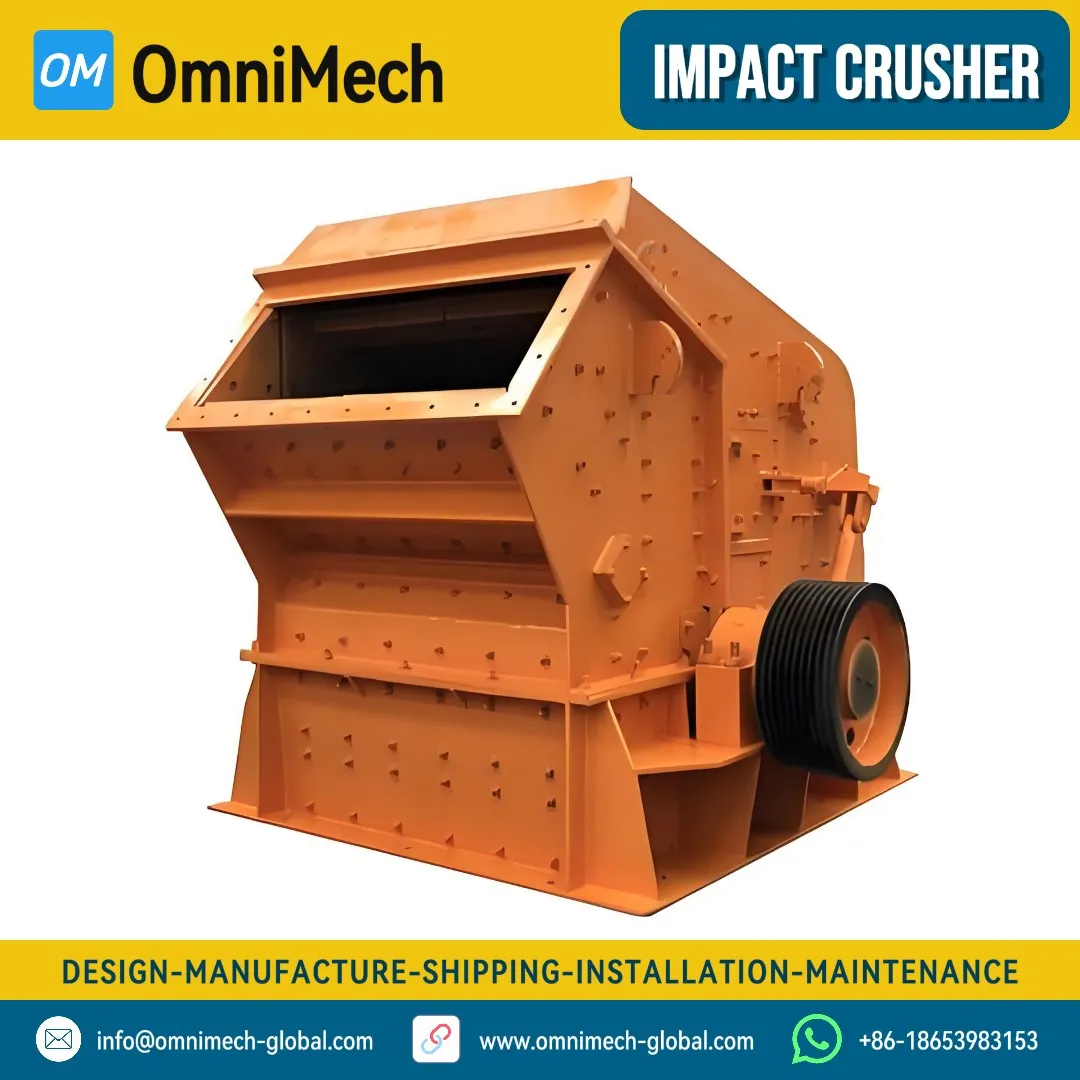
This impact-based crushing mechanism delivers two core advantages:
- Superior product shape: Impact fracturing along natural cleavage planes produces near-ideal cubic aggregates with extremely low flakiness content — far better than compression-type crushers
- High reduction ratio: Single-stage reduction ratios of 20-40 are achievable, reducing 350 mm feed to below 30 mm in one pass
Five Key Selection Parameters
3.1 Material Hardness and Abrasiveness
This is the first and most critical parameter to evaluate. Impact crushers are designed for medium-hard and below, low-abrasiveness materials. The standard evaluation criteria are Mohs hardness and Abrasion Index (AI):
| Material Type | Mohs Hardness | Abrasion Index | Suitable for HSI? |
|---|---|---|---|
| Limestone | 3-4 | Low | ✅ Perfect fit |
| Gypsum | 1.5-2 | Very Low | ✅ Perfect fit |
| Calcite | 3 | Low | ✅ Perfect fit |
| Dolomite | 3.5-4 | Medium-Low | ✅ Suitable |
| Basalt | 6-7 | High | ❌ Not recommended — extreme blow bar wear |
| Granite | 6-7 | High | ❌ Not recommended — choose a cone crusher |
| River Gravel | 6-7 | Medium-High | ⚠️ Possible at small scale, short blow bar life |
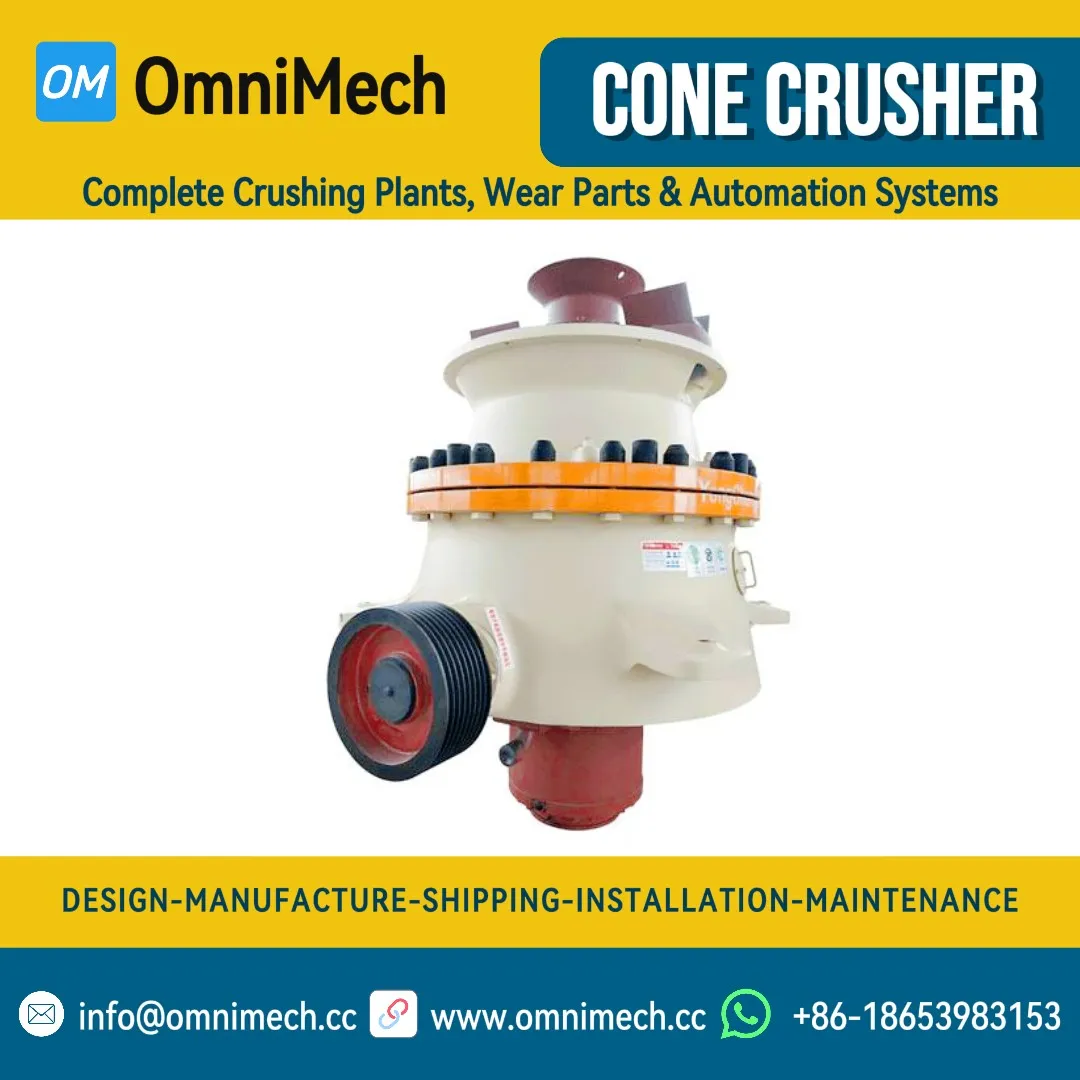
Engineering Tip: When material Mohs hardness exceeds 5 or abrasion index is elevated, prioritize a cone crusher for secondary crushing. See our PYB1200 Spring Cone Crusher or GP500 Single-Cylinder Hydraulic Cone Crusher.
3.2 Feed Size
The maximum feed size for an impact crusher is determined by the rotor diameter and feed opening dimensions. Feed size must never exceed the rated maximum — otherwise you risk:
- Rotor jamming and failure to start
- Abnormal blow bar impact leading to premature fracture
- Crushing chamber blockage and sudden capacity loss
| Model | Max. Feed Size | Matching Primary Crusher |
|---|---|---|
| PF-1010 | 250 mm | PE-400×600 / PE-500×750 |
| PF-1210 | 350 mm | PE-600×900 |
| PF-1214 | 350 mm | PE-600×900 / PE-750×1060 |
| PF-1315 | 350 mm | PE-750×1060 / PE-900×1200 |
Engineering Tip: The primary crusher’s CSS should be set so that 90%+ of its output is smaller than the impact crusher’s maximum feed size. If your primary stage uses a PE-600×900 Jaw Crusher with CSS at 80-100 mm, the output perfectly suits PF-1210 and above.
3.3 Capacity (Throughput)
Capacity is the core economic metric for selection. Note the critical difference between rated capacity and actual capacity:
- Rated capacity is typically measured under optimal conditions with limestone (medium-hard, low abrasion)
- Actual capacity is affected by material hardness, moisture content, feed gradation, and blow bar wear
- Field experience: Actual throughput typically reaches 70%-85% of rated capacity
Selection Calculation Example:
A limestone aggregate line requires 150 t/h. Applying a 0.8 duty factor, the required rated capacity = 150 ÷ 0.8 = 187.5 t/h. Comparing against rated capacities:
- PF-1010: 50-90 t/h → ❌ Insufficient
- PF-1210: 70-130 t/h → ❌ Insufficient
- PF-1214: 70-180 t/h → ⚠️ Marginal — not enough margin
- PF-1315: 130-250 t/h → ✅ Ample — recommended
Engineering Tip: Always build in 15%-25% capacity margin to prevent throughput shortfalls as blow bars wear. The PF-1315 Heavy-Duty Impact Crusher is the ideal choice for 150 t/h-class limestone lines.
3.4 Product Size and Shape Requirements
The finished product size from an impact crusher is determined by several factors working together:
- Rotor speed: Higher speed = greater impact energy = finer product
- Gap between impact plates and blow bars: Smaller gap = finer product (equivalent to the second crushing chamber’s CSS)
- Number of impact plate stages: Two-stage plates yield slightly coarser product than three-stage, but higher throughput
- Blow bar wear condition: Worn blow bars have blunter striking surfaces, producing coarser output
For projects with stringent aggregate shape requirements — highways, high-speed rail — impact crushers are virtually the only choice. Cubic aggregates from impact crushing typically have flakiness content below 5%, far superior to the 15%-25% typical of cone crushers.
3.5 Motor Power and Energy Consumption
Motor power directly determines electricity cost. Focus on specific energy consumption (kWh/t) rather than total power alone:
| Model | Motor Power | Rated Capacity Range | Est. Specific Energy |
|---|---|---|---|
| PF-1010 | 55-75 kW | 50-90 t/h | 0.8-1.2 kWh/t |
| PF-1210 | 110-132 kW | 70-130 t/h | 0.9-1.5 kWh/t |
| PF-1214 | 132-160 kW | 70-180 t/h | 0.8-1.4 kWh/t |
| PF-1315 | 200-220 kW | 130-250 t/h | 0.8-1.3 kWh/t |
Engineering Tip: Although the PF-1315 has the highest total power, its specific energy consumption is actually the lowest — larger machines achieve better energy efficiency at full load. When capacity matches, sizing up rather than down is an effective strategy for reducing unit energy costs.
Blow Bar Material Selection — The Key to Operating Costs
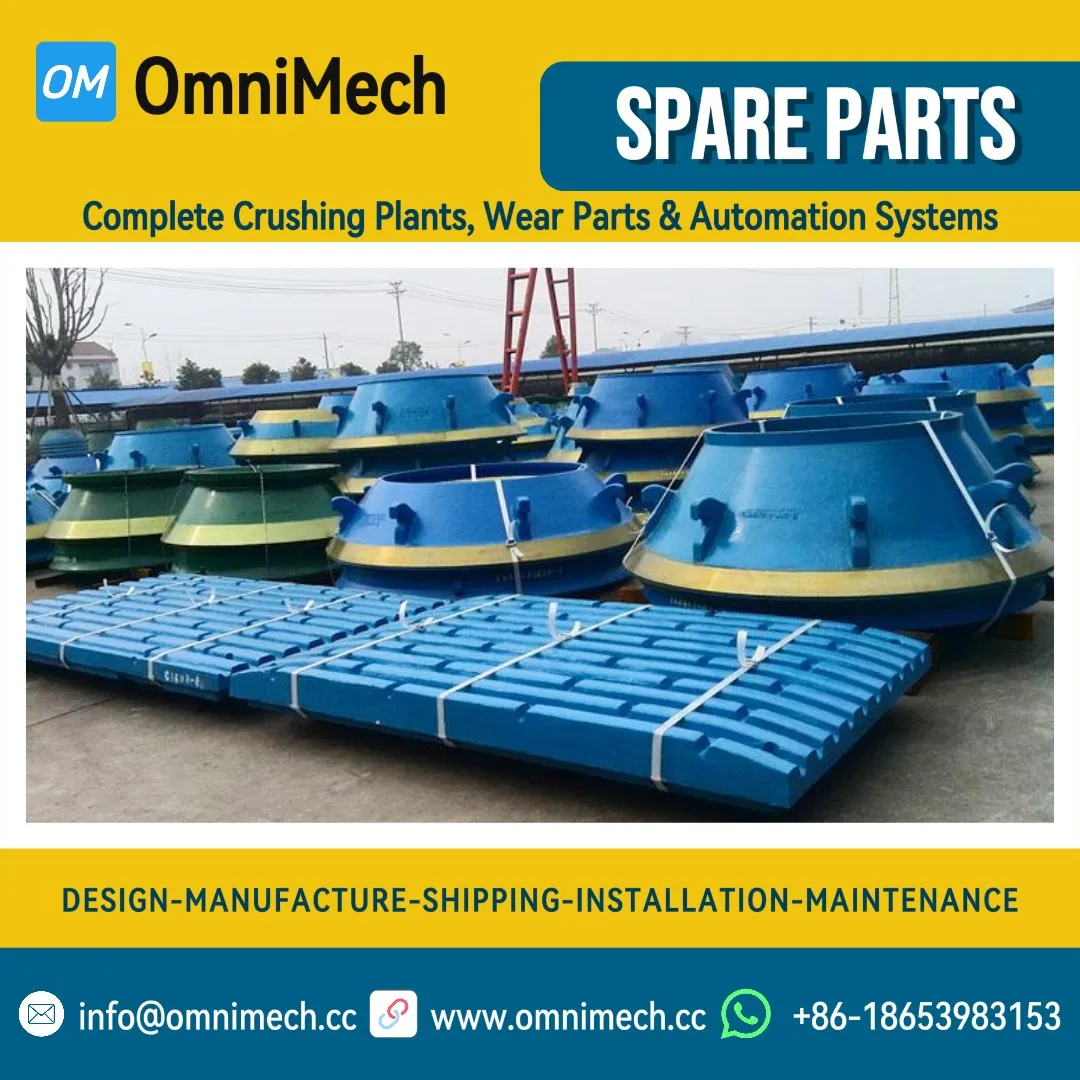
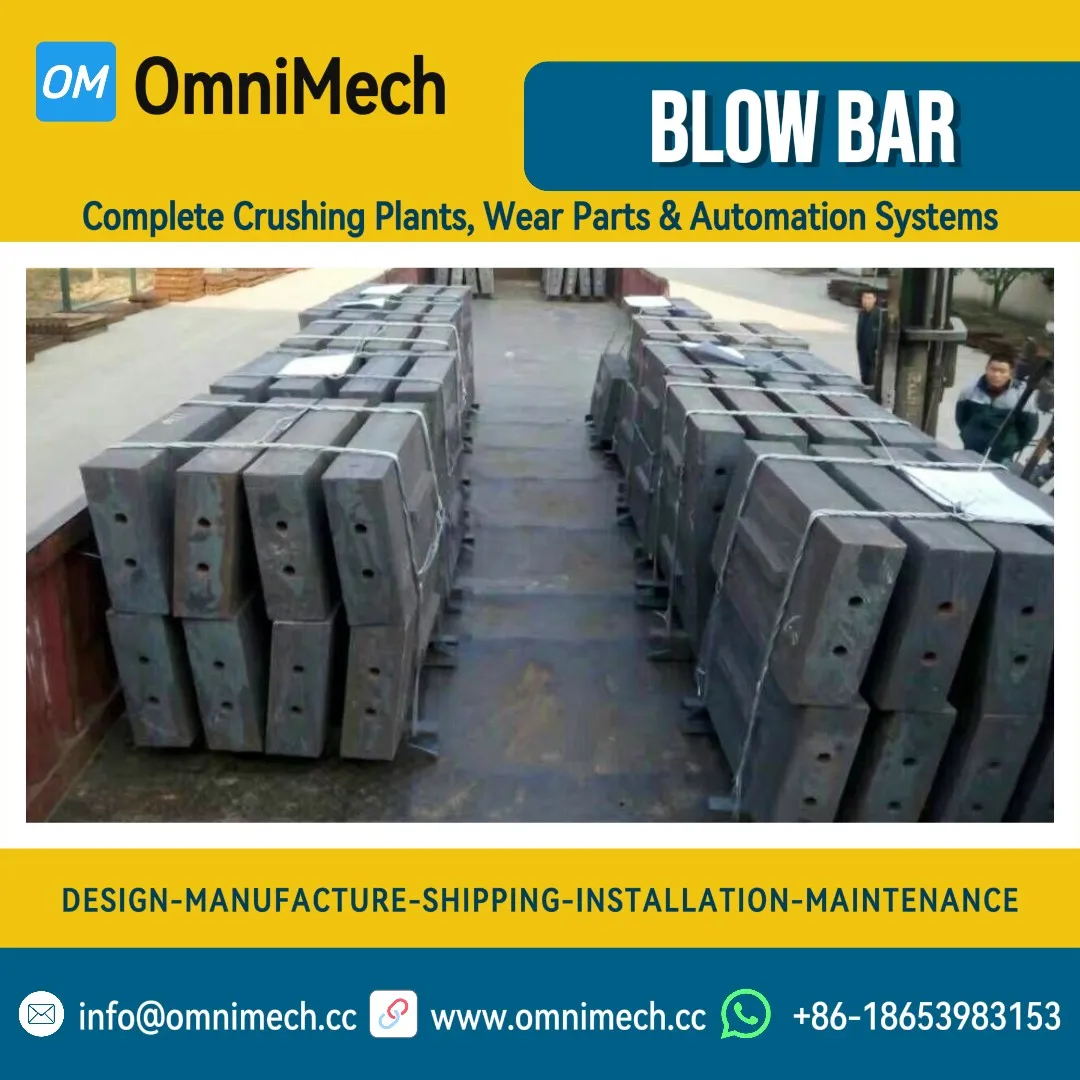
Blow bars are the primary wear parts in an impact crusher. Their material directly determines service life and per-ton wear cost. Three mainstream materials are available:
4.1 High-Manganese Steel (Mn13Cr2 / Mn18Cr2)
- Characteristics: Work-hardens continuously under impact — low initial hardness but increases during operation
- Best for: Large feed sizes, high-impact duty
- Service life: ~800-1,500 hours in limestone
- Economics: Lowest unit price, but also shortest life
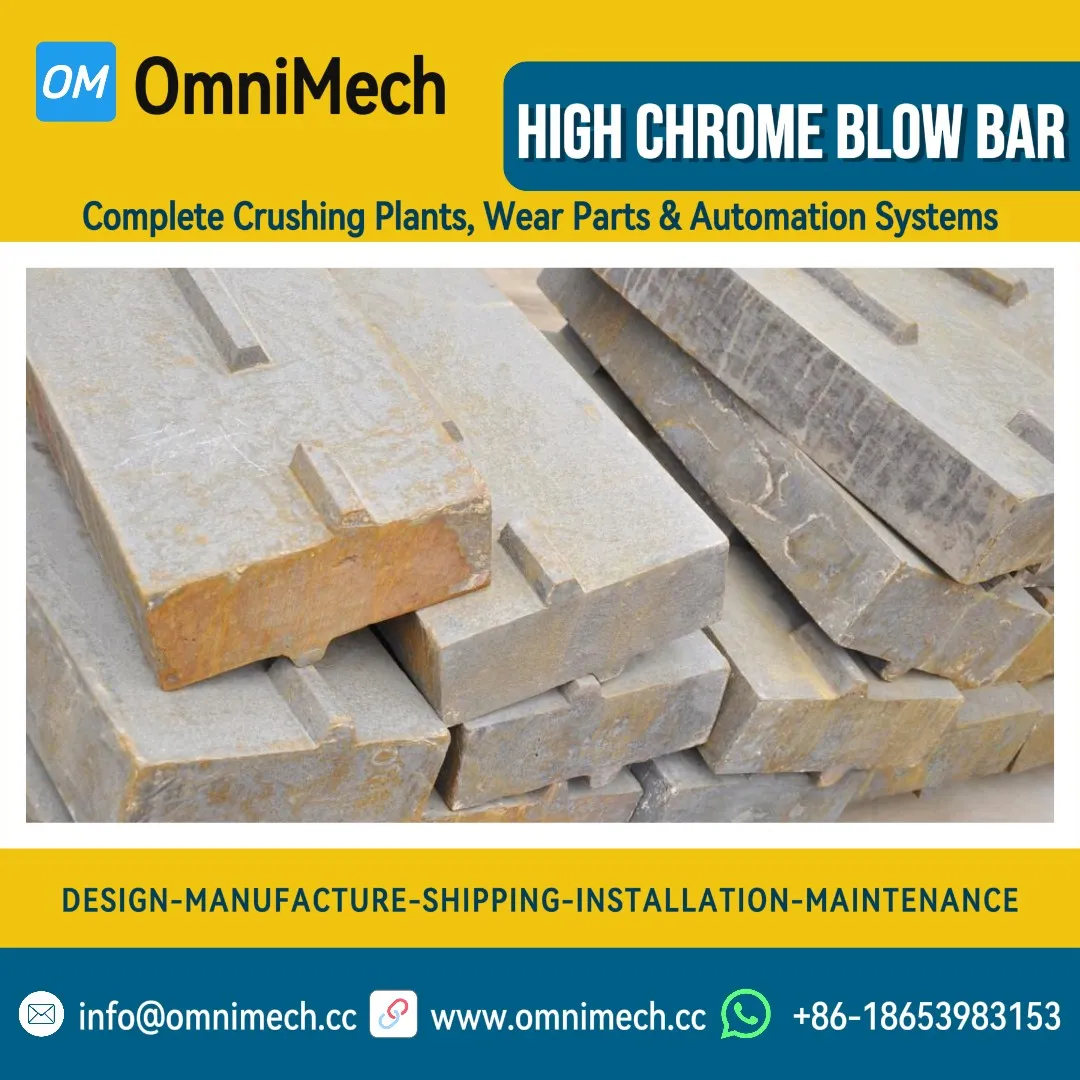
4.2 High-Chrome Cast Iron (Cr26 / Cr28)
- Characteristics: Extremely high initial hardness (HRC 58-64), chromium carbide hard phases provide outstanding wear resistance
- Best for: Medium-hard and below, fine crushing and shaping applications
- Service life: ~2,000-3,500 hours in limestone
- Economics: Higher unit price, but lowest per-ton cost — the recommended choice for limestone lines
4.3 Composite Material (High-Chrome + Ceramic Insert)
- Characteristics: Alumina ceramic studs embedded in a high-chrome matrix — 30%-50% further wear life improvement
- Best for: Highly abrasive materials or applications demanding maximum blow bar life
- Service life: ~3,000-5,000 hours in limestone
- Economics: Highest unit price, but lowest replacement frequency — total cost remains controlled
Selection Tip: For limestone aggregate lines, high-chrome Cr26 blow bars offer the best value. We supply OEM high-chrome blow bars for the entire PF series — see the PF-1210 Industrial Impact Crusher parts information for details.
Typical Application Scenarios and Model Recommendations
Scenario 1: Small-to-Medium Limestone Aggregate Line (80-120 t/h)
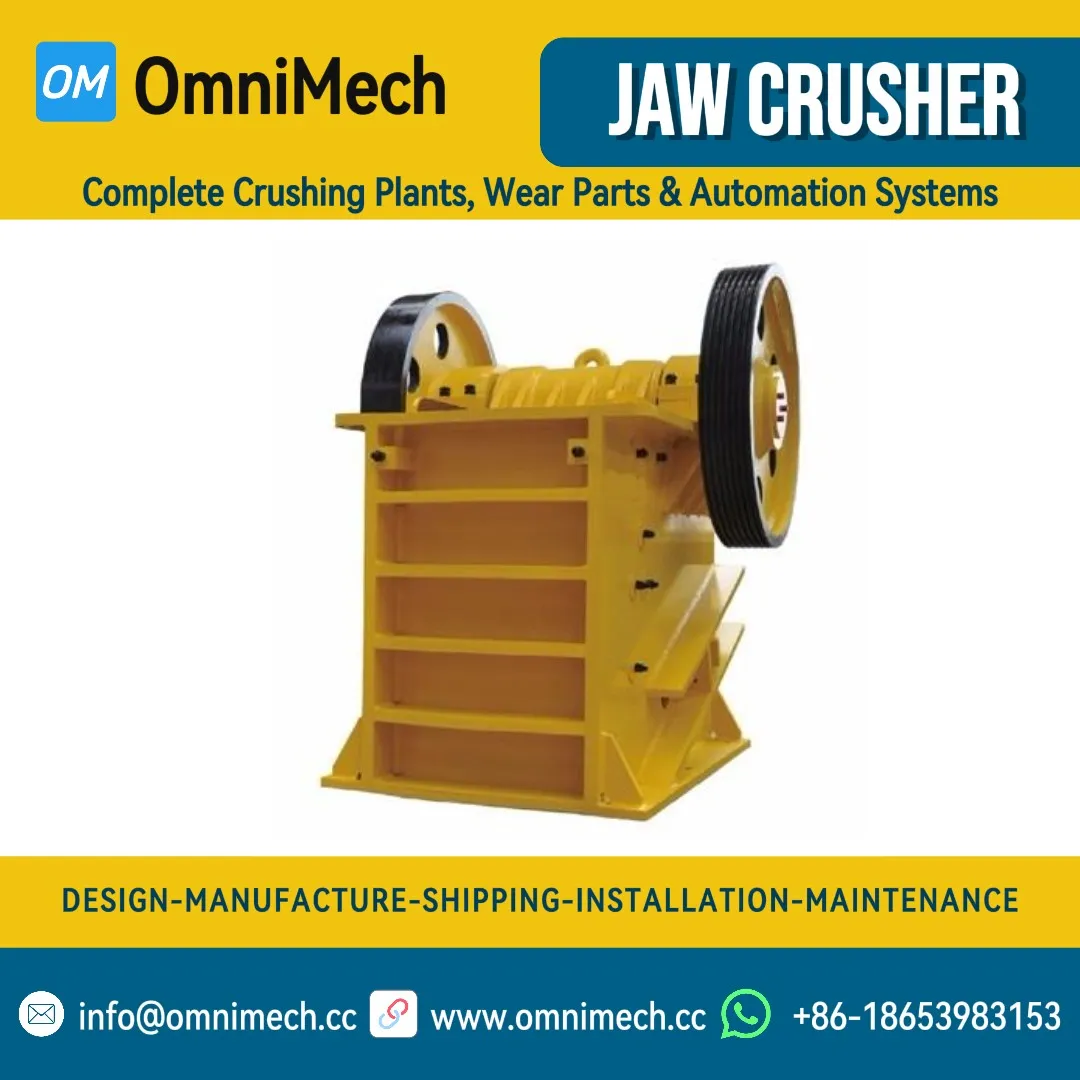
Recommended Configuration: PE-600×900 Jaw Crusher + PF-1210 Impact Crusher + 3YK1545 Vibrating Screen
- Feed: Limestone run-of-mine, max. 500 mm
- Primary crushing: PE-600×900, output 80-120 mm
- Secondary crushing: PF-1210, output 0-30 mm
- Screening: 3YK1545 circular vibrating screen, producing 0-5/5-10/10-20/20-30 mm fractions
- Investment advantage: PF-1210 motor only 110 kW, machine weight 17.7 t — low civil and electrical investment
Scenario 2: Medium Limestone/Dolomite Aggregate Line (150-200 t/h)
Recommended Configuration: PE-750×1060 Jaw Crusher + PF-1214 Impact Crusher + 3YK1860 Vibrating Screen
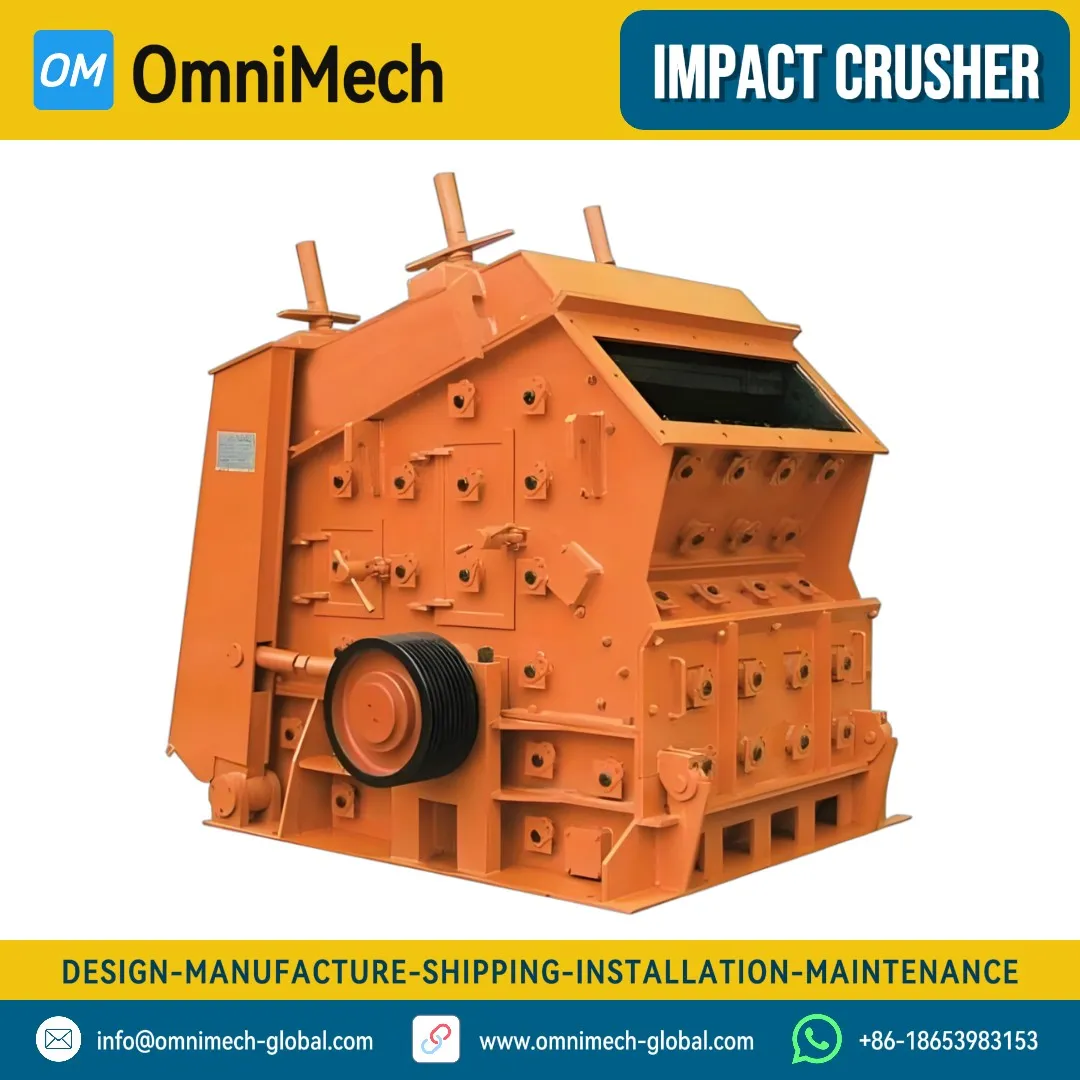
- Feed: Limestone/dolomite, max. 600 mm
- Primary crushing: PE-750×1060, output 100-150 mm
- Secondary crushing: PF-1214, output 0-35 mm
- Investment advantage: PF-1214 is the “golden model” for 150 t/h-class lines — outstanding value
Scenario 3: Large Limestone Aggregate Line (200-300 t/h)
Recommended Configuration: PE-900×1200 Jaw Crusher + PF-1315 Heavy-Duty Impact Crusher + 2×3YK1860 Vibrating Screens
- Feed: Limestone run-of-mine, max. 750 mm
- Primary crushing: PE-900×1200, output 120-180 mm
- Secondary crushing: PF-1315, output 0-40 mm
- Investment advantage: PF-1315 rotor weighs 27 t — massive inertia ensures stable full-load operation, the first choice for large limestone lines
Scenario 4: C&D Waste and Recycling (80-150 t/h)
Recommended Configuration: PE-600×900 Jaw Crusher + PF-1214 Impact Crusher + Magnetic Separator + Water Classification
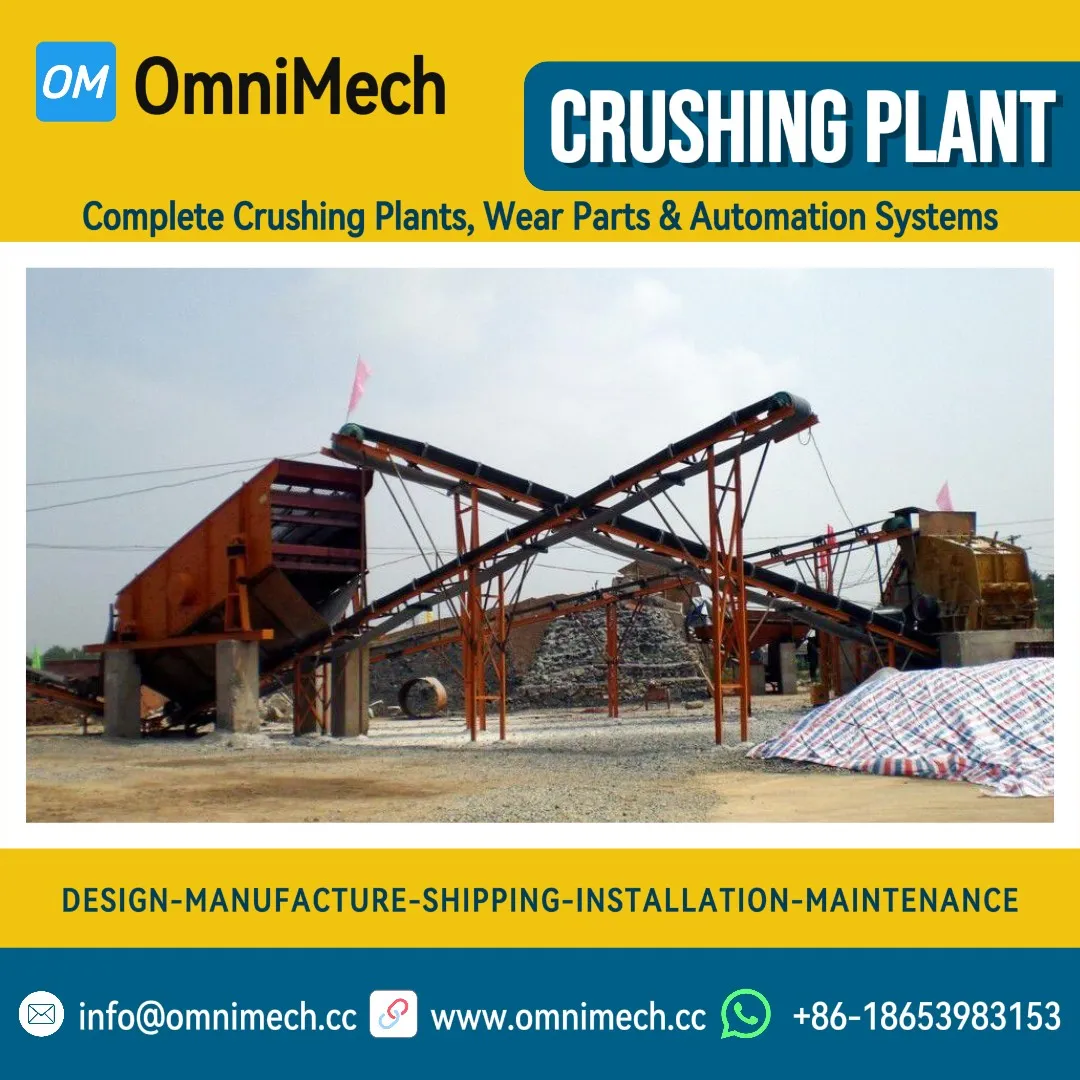
- Feed: Demolished concrete chunks, brick/masonry mix, max. 600 mm
- Primary crushing: Jaw crusher removes rebar, then coarse crushes
- Secondary crushing: PF-1214 reduces concrete to 0-20 mm recycled aggregate
- Investment advantage: PF-1214 hydraulic frame opening design makes clearing rebar tangles easy — ideal for recycling lines
Scenario 5: Small Mobile Crushing Plant (50-80 t/h)
Recommended Configuration: PF-1010 Compact Impact Crusher + Vibrating Feeder + Small Vibrating Screen
- PF-1010 weighs only 11.8 t, motor 55-75 kW
- Compact structure — easy to integrate onto mobile crusher chassis
- Investment advantage: Lowest equipment and operating costs in the entire PF series
Selection Decision Flowchart
Start Selection
  │
  ├─ Material Mohs hardness > 5? ──YES──→ Choose Cone Crusher
  │                                      (See GP300/GP500/PYB1200)
  │
  ├─ NO (hardness ≤ 5)
  │    │
  │    ├─ Design capacity ≤ 90 t/h? ──→ PF-1010
  │    ├─ Design capacity 90-130 t/h? ──→ PF-1210
  │    ├─ Design capacity 130-180 t/h? ──→ PF-1214
  │    └─ Design capacity 180-250 t/h? ──→ PF-1315
  │
  └─ Special conditions (rebar/high moisture) ──→ Prefer PF-1214 (hydraulic opening)
Common Selection Mistakes
Mistake 1: “Bigger is always better”
An oversized impact crusher running at low load leads to:
- Rotor inertia not fully released — crushing efficiency actually drops
- High proportion of no-load and low-load power consumption — specific energy rises
- Significantly higher equipment and civil construction costs
Correct approach: Select rated capacity at 1.15-1.25× actual demand.
Mistake 2: “Harder blow bars are always better”
High-chrome cast iron has extreme hardness but limited toughness — it can fracture under heavy, large-feed impact. If feed contains a high proportion of >200 mm limestone blocks, choose high-manganese or medium-chrome blow bars for their superior impact toughness.
Correct approach: Select blow bar material based on feed size and impact intensity, not solely on hardness.
Mistake 3: “Impact crushers don’t need controlled feeding”
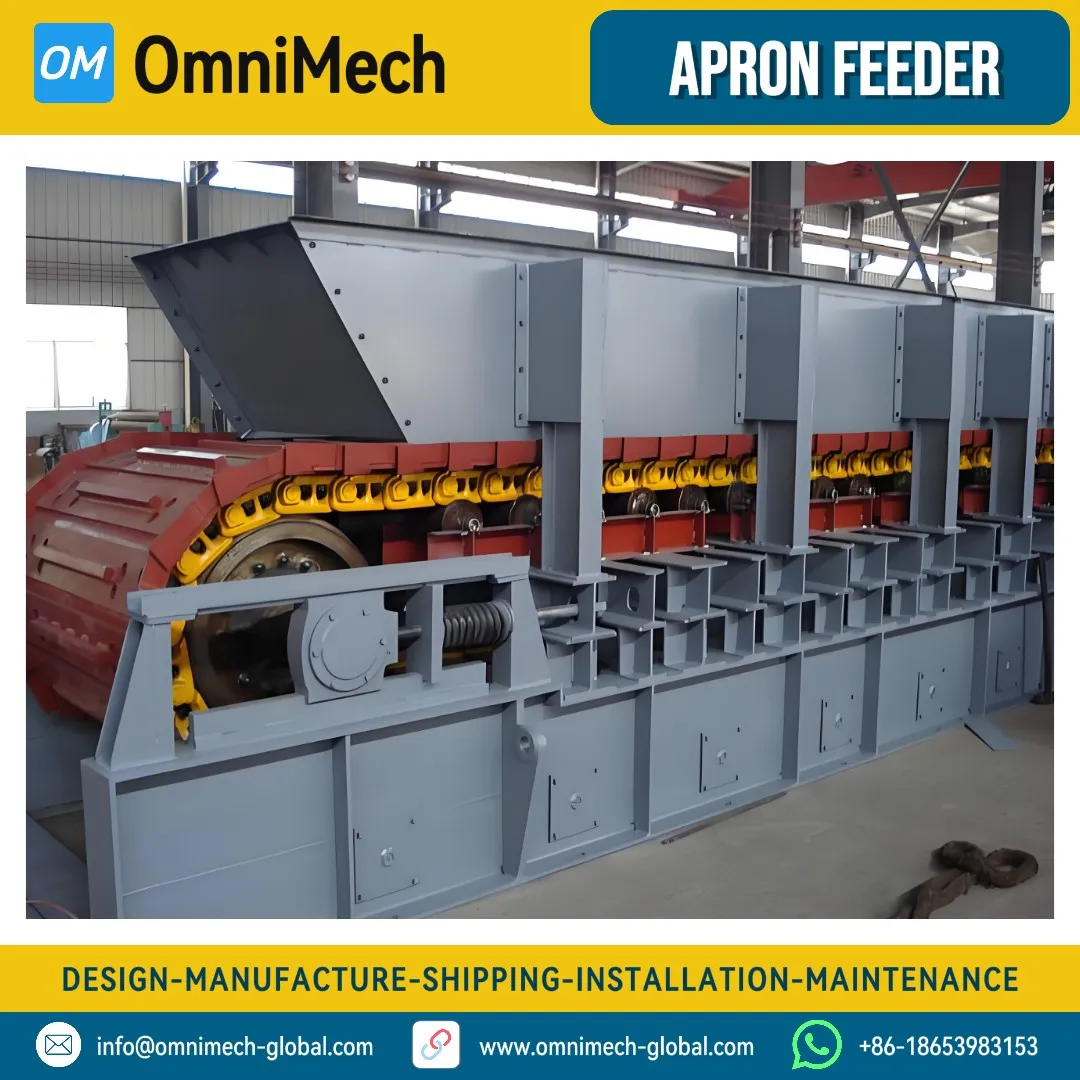
Impact crushers are extremely sensitive to feed uniformity. Off-center feeding causes accelerated wear on one side of the rotor, leading to severe vibration and bearing overheating. A vibrating feeder must be installed to ensure even, centered, continuous feed.
Correct approach: Install a ZSW-490×110 Vibrating Feeder upstream to ensure uniform feeding and pre-screen fines.
Summary and Recommendations
| Selection Factor | Key Decision | Recommended Model |
|---|---|---|
| Material hardness ≤ 5, low abrasion | ✅ Suitable for HSI | All PF models |
| Design capacity 50-90 t/h | Small-to-medium line | PF-1010 |
| Design capacity 70-130 t/h | Medium line | PF-1210 |
| Design capacity 70-180 t/h | Medium-to-large line | PF-1214 |
| Design capacity 130-250 t/h | Large line | PF-1315 |
| Blow bar material (limestone) | Best value | High-Chrome Cr26 |
| Blow bar material (large feed, heavy impact) | Best impact resistance | High-Manganese Mn18Cr2 |
Impact crusher selection is fundamentally about optimizing the balance between material characteristics, capacity requirements, and operating costs. Choosing the right model and blow bar material not only safeguards line capacity and product quality — it can save tens of thousands in wear parts and electricity costs over a 3-5 year operating period.
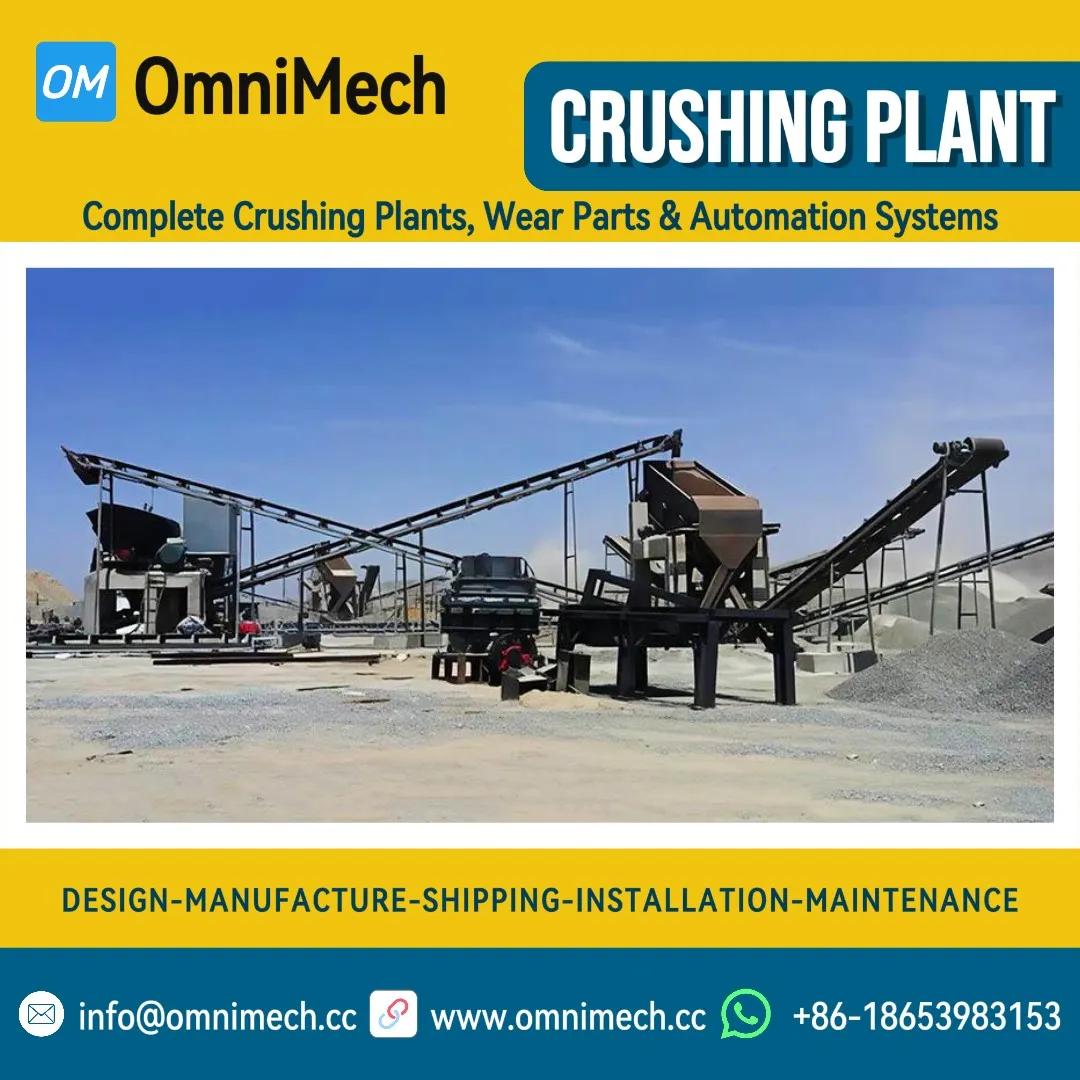
If you’re planning a new aggregate production line or upgrading an existing one, contact the OmniMech engineering team. We offer factory-direct pricing on the entire PF impact crusher series and can customize a complete process solution from primary crushing through screening.
👉 Request a Free Quote & Complete Line Process Solution Our engineering team will provide professional selection advice and competitive pricing within 24 hours!