Jaw Crusher Selection Guide: From Material Characteristics to Model Matching
OmniMech Engineering Team
omnimech Team
Why Jaw Crusher Selection Is So Critical
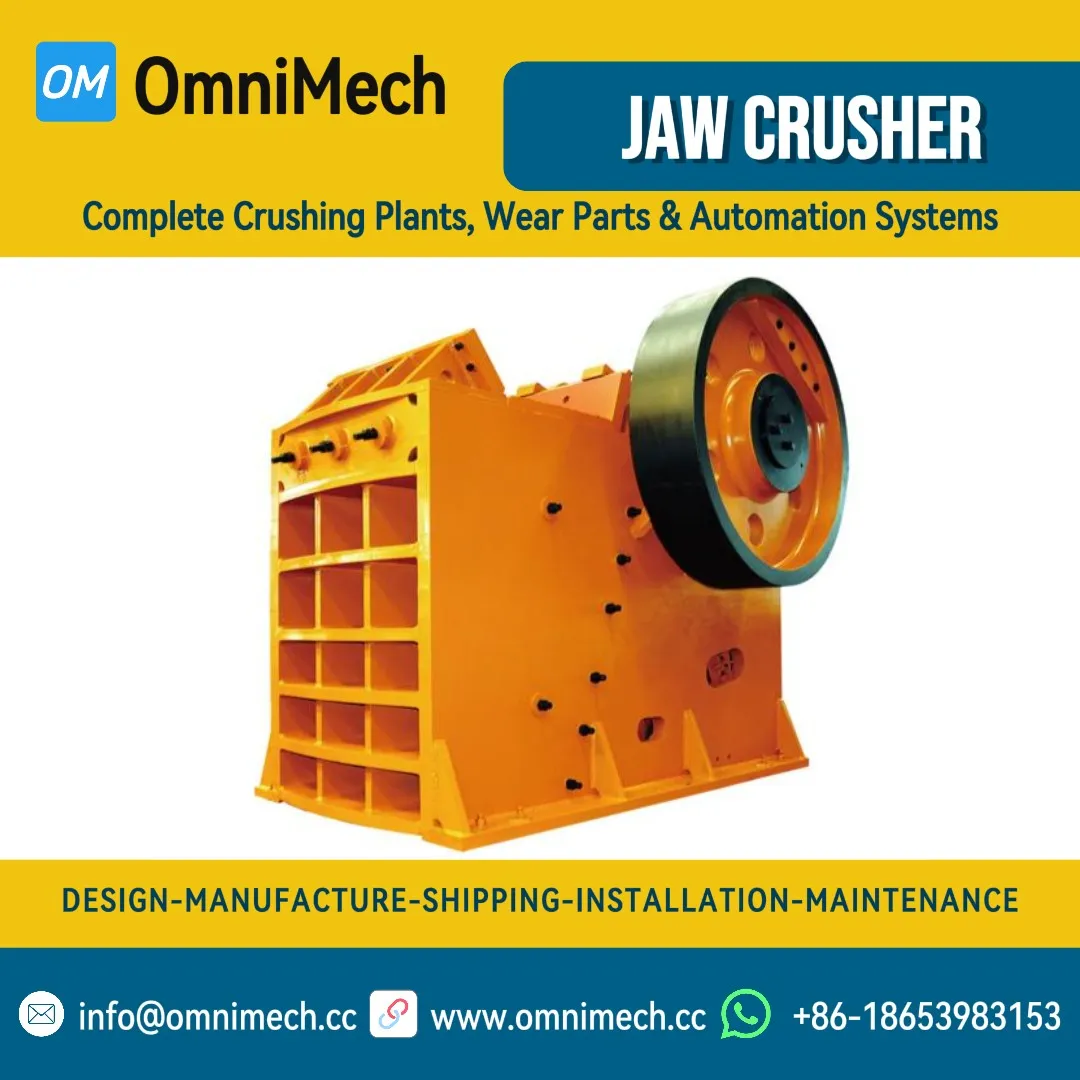
The jaw crusher is the absolute workhorse for primary crushing in aggregate production lines and mineral processing plants — it’s the “throat” of the entire operation. Get the selection right, and your downstream cone crusher or impact crusher receives ideal feed gradation, the whole line delivers ample capacity, and operating costs stay under control. Get it wrong, and you face undersized discharge, frequent secondary crusher stall-outs, or worse — a bottlenecked production line with a severely compromised return on investment.
This guide provides a practical engineering methodology across six dimensions: working principles, selection parameters, jaw plate materials, PE vs PEX differences, typical application scenarios, and model recommendations.
How Jaw Crushers Work
2.1 Core Crushing Action: Double-Toggle Compression
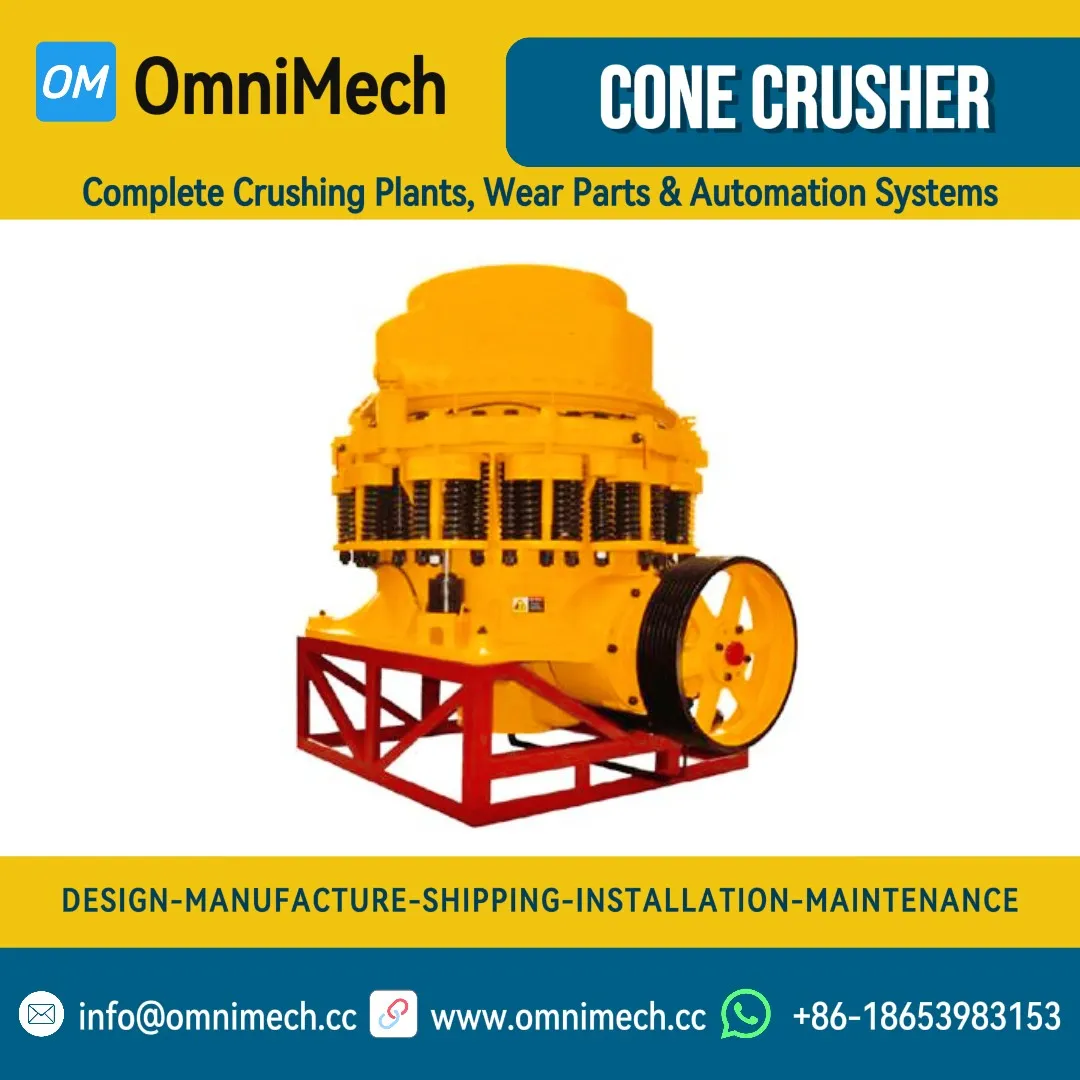
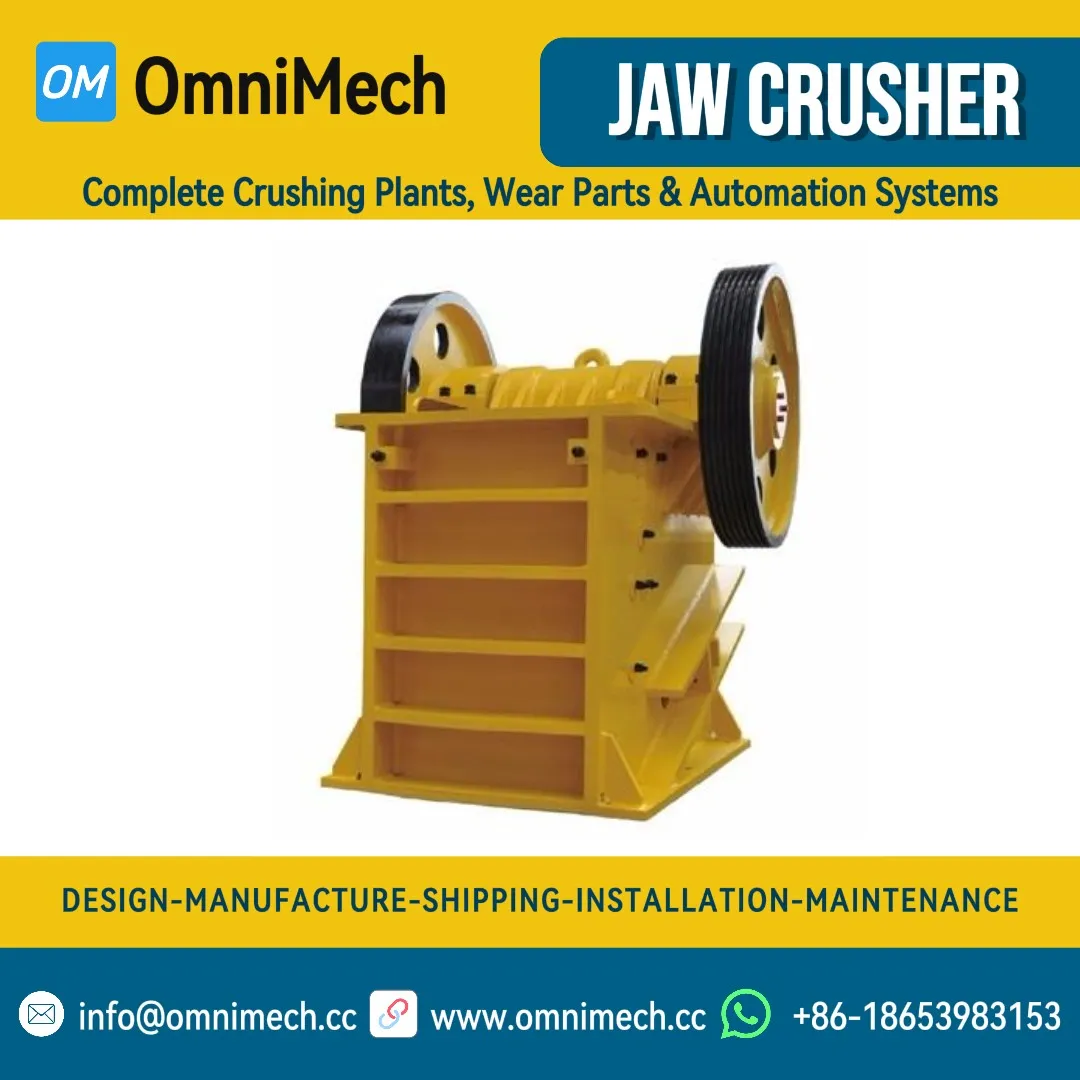
The jaw crusher’s core crushing mechanism is compression. The motor drives the eccentric shaft via a belt pulley, and the eccentric shaft imparts a periodic back-and-forth motion to the moving jaw. When the moving jaw advances toward the stationary jaw, material in the crushing chamber is forcefully compressed, split, and bent until it fractures. When the moving jaw retracts, crushed material exits by gravity through the bottom discharge opening while new feed enters from above.
This compression-based crushing delivers three core advantages:
- Extremely broad material compatibility: From Mohs 3 limestone to Mohs 7+ granite, basalt, and iron ore — jaw crushers handle it all as primary crushers
- High reduction ratio: Single-stage reduction ratios of 3-6 are achievable, reducing 1000 mm run-of-mine down to 100-200 mm
- Simple structure, easy maintenance: Compared to cone and impact crushers, jaw crushers have the fewest moving parts and the lowest routine maintenance workload
2.2 Closed Side Setting (CSS) and Reduction Ratio
The Closed Side Setting (CSS) is the jaw crusher’s most critical adjustable parameter. It directly determines:
- Discharge size: Smaller CSS = finer output
- Throughput capacity: Smaller CSS = lower capacity
- Jaw plate wear: Excessively small CSS reduces the pass-through area at the bottom of the crushing chamber, causing material over-grinding and accelerated plate wear
Engineering Rule of Thumb: For primary crushing, the jaw crusher CSS should typically be set to 0.6-0.8 times the maximum feed size of the downstream secondary crusher, ensuring 90%+ of the discharge meets secondary crusher feed requirements.
PE vs PEX — Understanding the Two Jaw Crusher Families
This is the most fundamental yet commonly confused aspect of jaw crusher selection. Although both are called “jaw crushers,” the PE and PEX series have fundamentally different chamber designs, feed opening geometries, and application targets:
| Comparison | PE Series (Primary) | PEX Series (Secondary/Fine) |
|---|---|---|
| Feed opening shape | Deep V-shape, wide and deep | Wide and shallow, narrow and long |
| Max. feed size | Large (320-1020 mm) | Small (210-250 mm) |
| CSS range | Wide (40-300 mm) | Narrow (15-50 mm) |
| Crushing stage | Primary crushing | Secondary fine crushing |
| Reduction ratio | 3-6 | 6-10 |
| Typical application | ROM coarse crushing, large block reduction | Further size reduction of pre-crushed material |
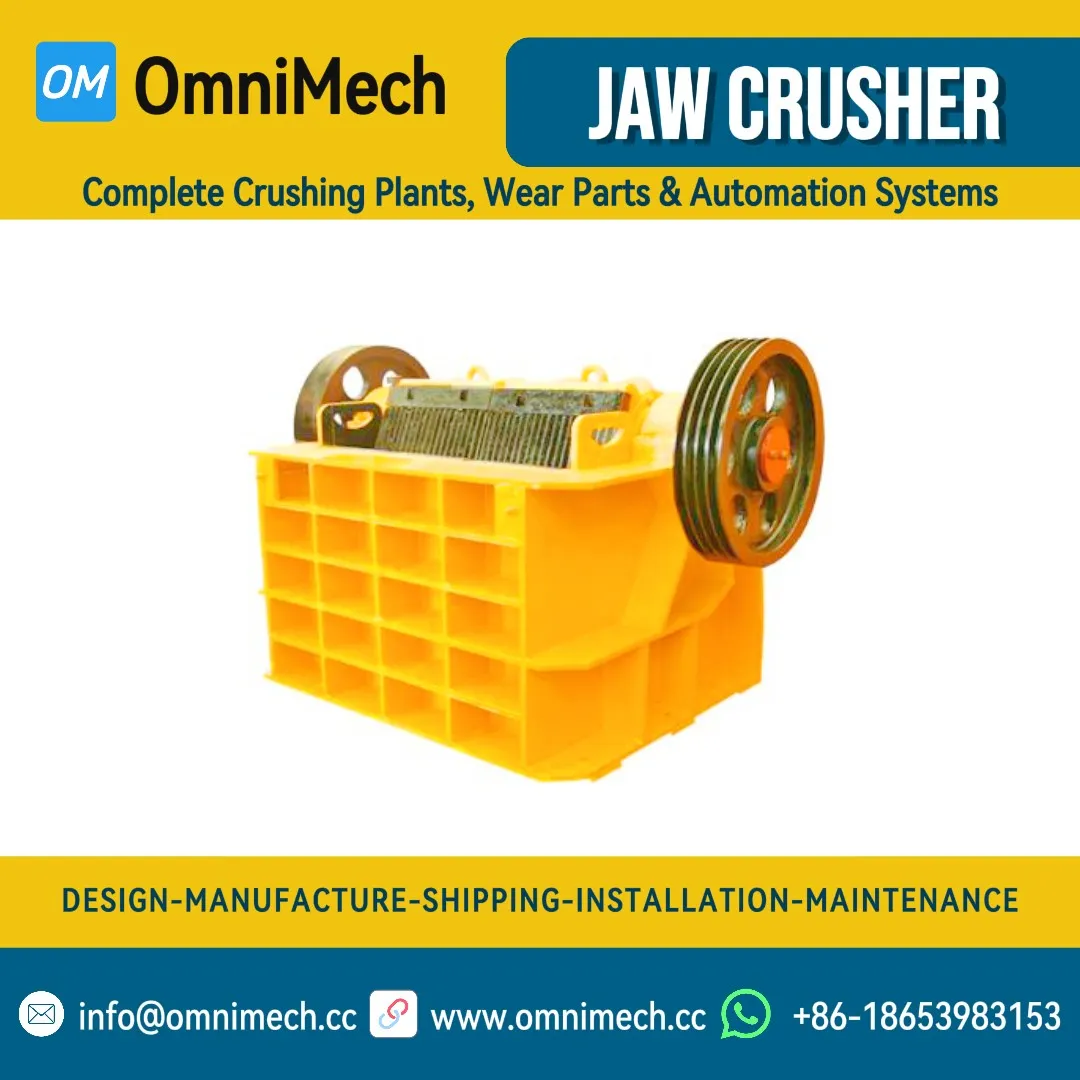
Selection Principle: PE series for primary crushing — directly processing blasted ROM. PEX series for secondary fine crushing — bridging the gap between a PE jaw crusher and a cone/impact crusher. Never substitute a PEX for a PE in primary crushing — its insufficient feed depth cannot effectively grip large blocks.
Six Key Selection Parameters
4.1 Material Hardness and Abrasiveness
This is the first parameter to evaluate. Among all crushing equipment, the jaw crusher has the widest tolerance for material hardness — from soft rock to extremely hard ore:
| Material Type | Mohs Hardness | Compressive Strength (MPa) | Jaw Crusher Suitability |
|---|---|---|---|
| Limestone | 3-4 | 60-120 | ✅ Perfect fit |
| Dolomite | 3.5-4 | 80-150 | ✅ Perfect fit |
| Granite | 6-7 | 120-250 | ✅ Core strength area |
| Basalt | 6-7 | 150-300 | ✅ Core strength area |
| Iron Ore | 5.5-6.5 | 100-250 | ✅ Standard for mineral processing |
| River Gravel | 6-7 | 120-250 | ✅ Suitable |
| Coal Gangue | 3-4 | 30-80 | ✅ Suitable |
Engineering Tip: Jaw crushers are virtually unrestricted by material hardness, but harder materials accelerate jaw plate wear. For highly abrasive hard rock like granite and basalt, choose Mn18Cr2 or Mn22Cr2 high-manganese steel jaw plates — as standard on the PE-600×900 Jaw Crusher.
4.2 Maximum Feed Size
Maximum feed size is determined by the jaw crusher’s feed opening dimensions. Feed size must not exceed 85% of the feed opening width, otherwise:
- Bridging and blockage at the top of the crushing chamber, preventing material from descending
- Moving jaw unable to grip large blocks, resulting in slipping and idle strokes
- Sudden capacity drop with erratic motor current
| Model | Feed Opening | Max. Feed Size | Matching Blast Pattern |
|---|---|---|---|
| PE-400×600 | 400×600 mm | 320 mm | Shallow holes, small benches |
| PE-500×750 | 500×750 mm | 425 mm | Medium benches |
| PE-600×900 | 600×900 mm | 500 mm | Standard benches |
| PE-750×1060 | 750×1060 mm | 630 mm | Large benches, deep holes |
| PE-900×1200 | 900×1200 mm | 750 mm | Large benches, deep holes |
| PE-1200×1500 | 1200×1500 mm | 1020 mm | Extra-large benches / mega-mines |
Engineering Tip: Ensure the jaw crusher feed opening width is ≥ 1.2 times the maximum blasted block size. For a maximum block size around 500 mm, the PE-600×900 (600 mm opening) is the minimum, while the PE-750×1060 (750 mm opening) provides more comfortable headroom.
4.3 Capacity (Throughput)
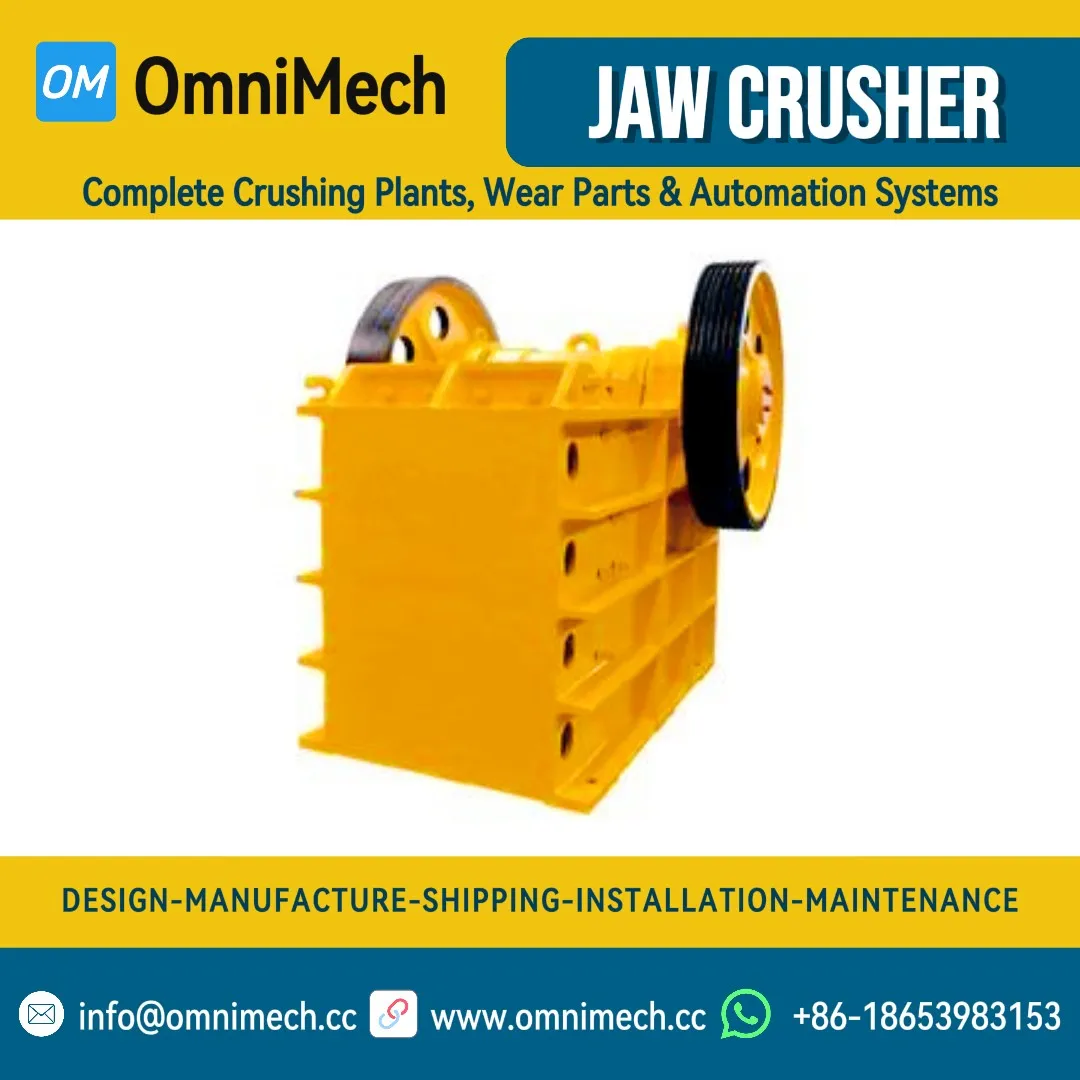
Capacity is the core economic metric for selection. Note the critical difference between rated capacity and actual capacity:
- Rated capacity is typically based on medium-hardness material (e.g., limestone) under optimal conditions
- Actual capacity is affected by material hardness, moisture content, feed gradation, jaw plate wear, and other factors
- Engineering Rule of Thumb: Actual capacity typically reaches 70%-90% of rated capacity
Selection Calculation Example:
A granite aggregate line requires 200 t/h primary crusher output. Applying a 0.8 duty factor, the required rated capacity = 200 ÷ 0.8 = 250 t/h. Comparing rated capacities:
- PE-400×600: 15-40 t/h → ❌ Severely insufficient
- PE-500×750: 45-100 t/h → ❌ Severely insufficient
- PE-600×900: 50-160 t/h → ❌ Insufficient
- PE-750×1060: 110-242 t/h → ⚠️ Marginal, insufficient margin
- PE-900×1200: 220-500 t/h → ✅ Ample, recommended
Engineering Tip: Always leave 15%-25% capacity margin to avoid falling short as jaw plates wear. The PE-900×1200 Mega-Duty Jaw Crusher is the ideal choice for 200 t/h hard rock lines.
4.4 CSS Setting and Downstream Matching
The jaw crusher’s CSS must be carefully matched to the downstream secondary crusher’s feed requirements:
| Downstream Secondary Crusher | Recommended Jaw CSS | Discharge P80 |
|---|---|---|
| PF-1210 Impact Crusher | 80-100 mm | 120-150 mm |
| PF-1214 Impact Crusher | 100-130 mm | 150-180 mm |
| PF-1315 Impact Crusher | 120-160 mm | 180-220 mm |
| GP220 Cone Crusher (C chamber) | 80-120 mm | 120-160 mm |
| GP300 Cone Crusher (C chamber) | 130-160 mm | 180-220 mm |
| PEX-250×1200 Fine Jaw Crusher | 80-120 mm | 120-160 mm |
Engineering Tip: If the downstream is an impact crusher processing soft rock like limestone, CSS can be opened up to boost capacity. If the downstream is a cone crusher processing hard rock, CSS must be tightly controlled to ensure discharge meets the cone crusher’s feed requirements. See our Impact Crusher Selection Guide and Single-Cylinder Cone Crusher Selection Guide.
4.5 Motor Power and Energy Consumption
Motor power directly determines electricity cost. Focus on specific energy consumption (kWh/t) rather than just total installed power:
| Model | Motor Power | Rated Capacity Range | Estimated Specific Energy |
|---|---|---|---|
| PE-400×600 | 30 kW | 15-40 t/h | 0.6-1.5 kWh/t |
| PE-500×750 | 55 kW | 45-100 t/h | 0.5-1.0 kWh/t |
| PE-600×900 | 75 kW | 50-160 t/h | 0.4-1.1 kWh/t |
| PE-750×1060 | 110 kW | 110-242 t/h | 0.4-0.8 kWh/t |
| PE-900×1200 | 132 kW | 220-500 t/h | 0.3-0.5 kWh/t |
| PE-1200×1500 | 250 kW | 400-800 t/h | 0.3-0.5 kWh/t |
Engineering Tip: Larger jaw crushers deliver significantly lower specific energy consumption at full load. The PE-900×1200 uses only 1/3 the per-ton energy of the PE-400×600. When capacity matches, sizing up is an effective strategy for reducing long-term energy costs.
4.6 Feed Method and Uniformity
Jaw crushers are highly sensitive to feed uniformity. Uneven feeding causes:
- Asymmetric wear: one jaw plate wears far faster than the other, reducing plate life by 30%-50%
- Capacity loss: one side of the chamber is overloaded while the other idles, reducing effective crushing area
- Increased vibration: off-center loading causes abnormal frame vibration and shortened bearing life
Best Practices:
- Install a ZSW-490×110 Vibrating Feeder upstream for even, continuous, centered feeding
- The feeder’s grizzly bars pre-screen fines (material smaller than CSS doesn’t need to enter the jaw crusher), boosting effective capacity by 15%-20%
- Never allow one-sided stockpiling with the other side empty
Jaw Plate Material Selection — The Key to Operating Costs
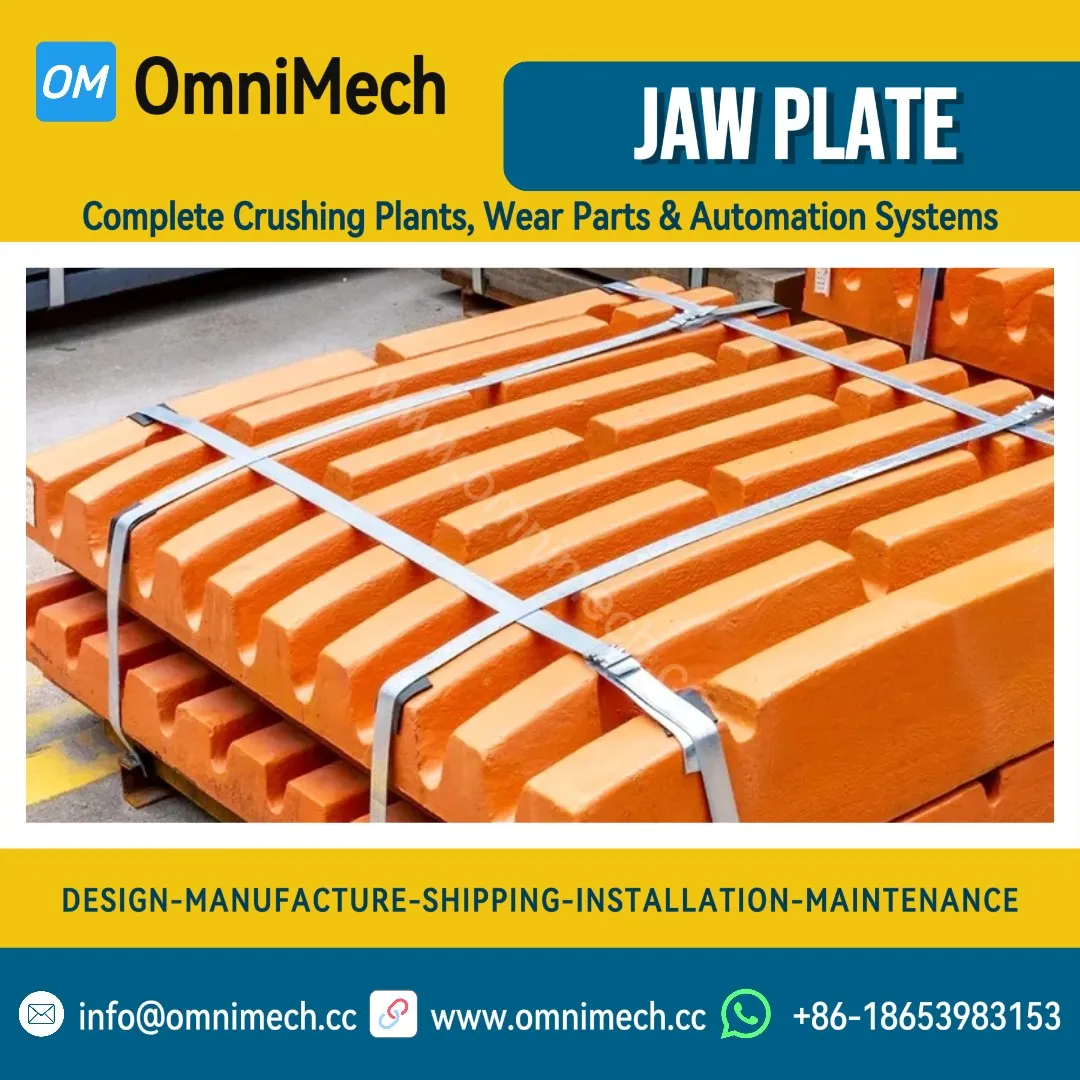
Jaw plates (moving jaw plate + stationary jaw plate) are the jaw crusher’s core wear parts, accounting for 50%-70% of total operating costs.
5.1 Material Types and Application Conditions
| Material | Initial Hardness (HB) | Work-Hardened Hardness | Application | Expected Life (Granite) |
|---|---|---|---|---|
| Mn13Cr2 | 220-260 | HRC 40-50 | Medium impact, medium abrasion | 600-1,200 hours |
| Mn18Cr2 | 240-280 | HRC 45-55 | High impact, high abrasion | 1,000-2,000 hours |
| Mn22Cr2 | 260-300 | HRC 50-58 | Extreme impact, extreme abrasion | 1,500-2,800 hours |
5.2 Core Principles for Jaw Plate Selection
Principle 1: Hard rock demands high-manganese steel; soft rock is fine with medium-manganese
For high-impact applications like granite, basalt, and iron ore, high-manganese steel’s work-hardening characteristic continuously increases surface hardness during operation, delivering far superior wear resistance. For low-impact limestone applications, Mn13Cr2 is sufficient — Mn22Cr2 would be overkill.
Principle 2: Pay attention to plate symmetry
Quality jaw plates feature fully symmetric design — when the bottom is worn, plates can be flipped top-to-bottom, utilizing the fresh upper zone and doubling plate life. This is the simplest and most effective way to reduce per-ton jaw plate costs.
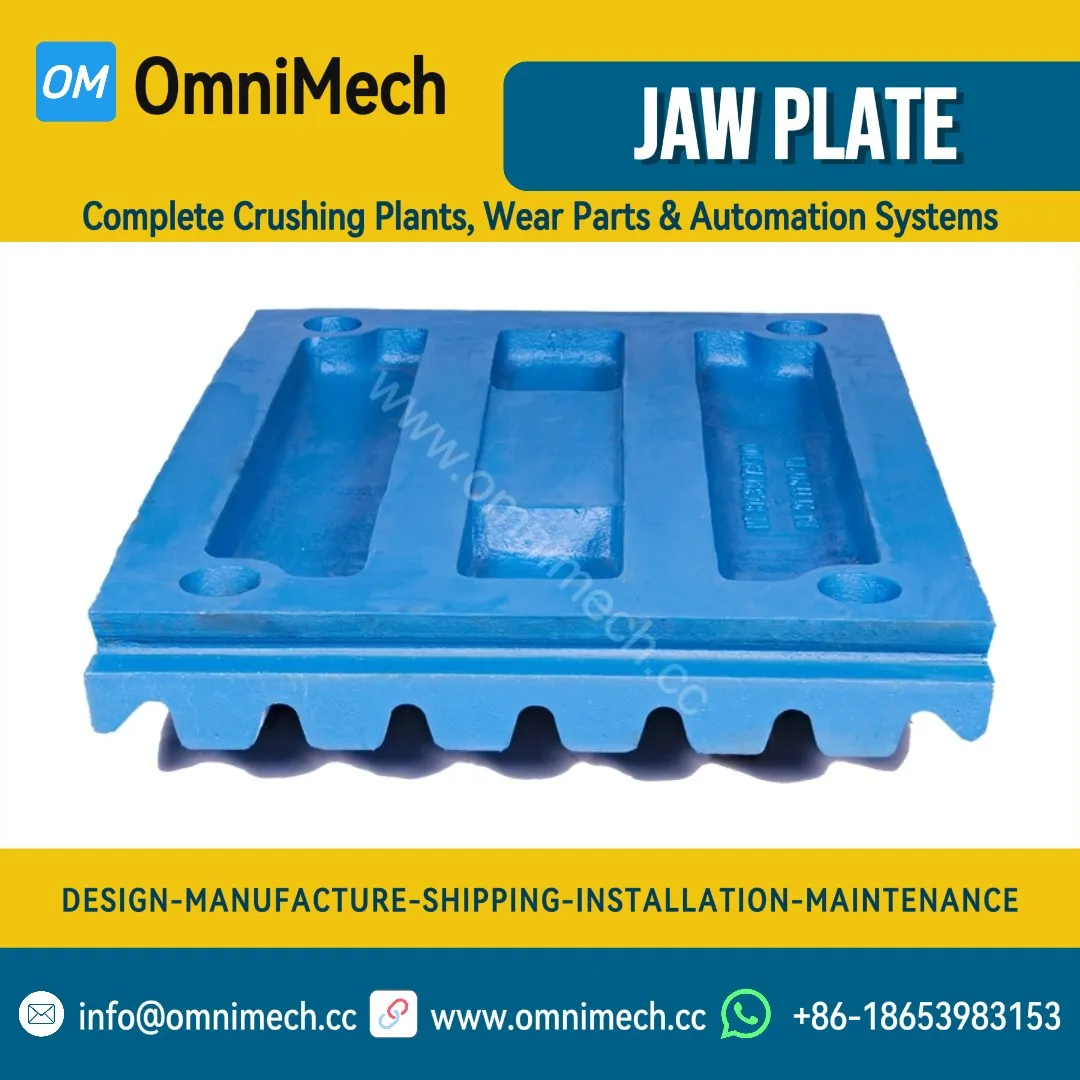
Principle 3: Tooth profile selection affects grip force
- Deep tooth profile: Strong grip, ideal for large-block hard rock primary crushing, high crushing efficiency
- Shallow/flat tooth profile: More uniform discharge, suitable for secondary fine crushing (PEX series)
- Corrugated profile: Balances grip force and discharge uniformity, a versatile general-purpose choice
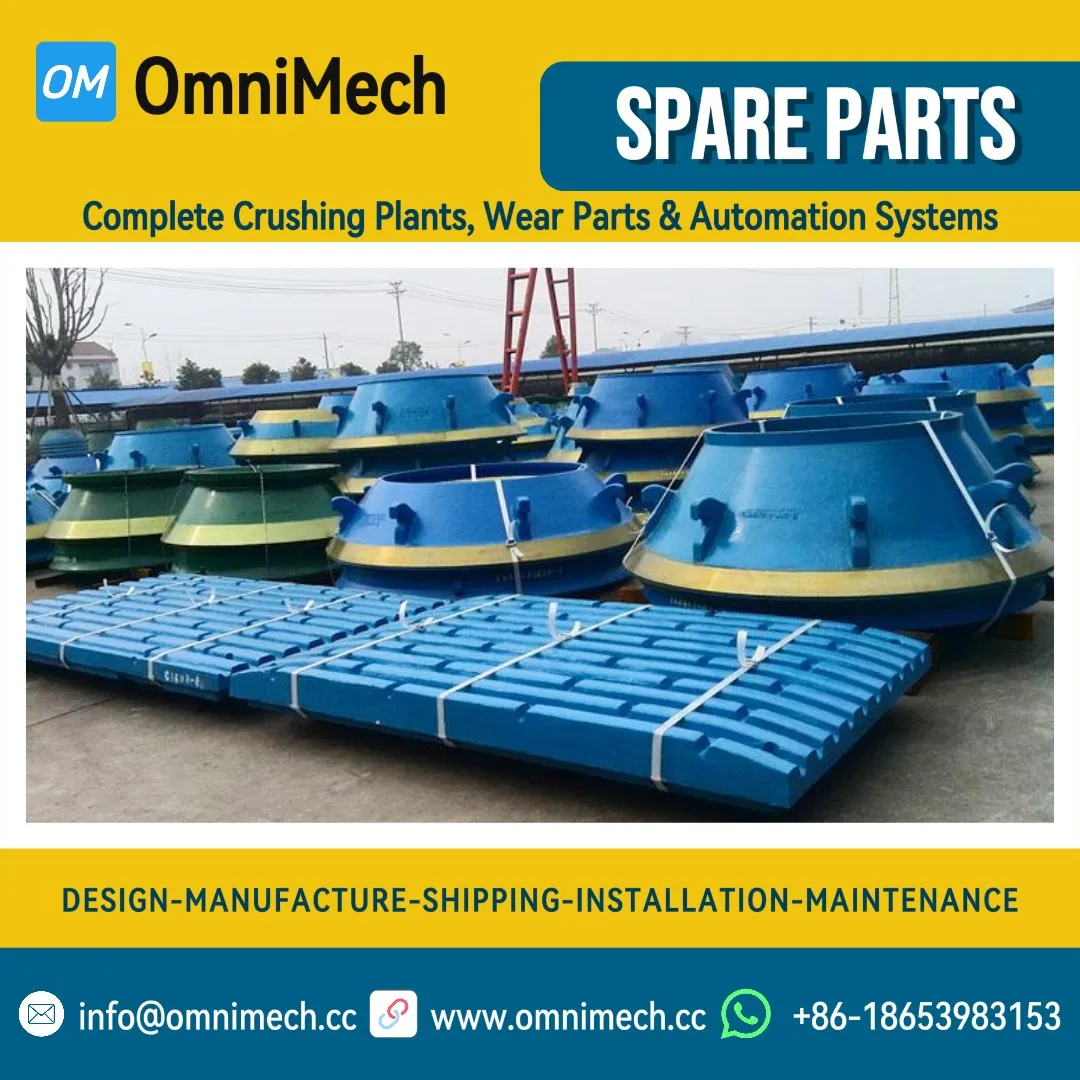
Procurement Tip: We supply OEM high-manganese steel jaw plates for the entire PE/PEX range, available in Mn13Cr2/Mn18Cr2/Mn22Cr2 grades and multiple tooth profiles. See the PE-600×900 Jaw Crusher for accessory details.
PE Series vs C Series European Jaw Crusher — Which to Choose?
Beyond the classic PE series, OmniMech also offers the C series European jaw crusher. The core differences lie in frame structure and kinematics design:
| Comparison | PE Series | C Series (European) |
|---|---|---|
| Frame structure | Integral welded box | Non-welded bolted sectional |
| Transport convenience | Shipped whole; extra-large models need disassembly | Modular disassembly, container-friendly |
| Chamber kinematics | Standard stroke | High-stroke aggressive design |
| CSS adjustment | Shim/wedge type | Hydraulic wedge type |
| Overload protection | Cast iron toggle plate fracture | Cast iron toggle plate fracture |
| Maintenance convenience | Standard | Superior (non-welded frame easier to service) |
| Investment cost | Lower | Higher |
| Best suited for | General-purpose, broad coverage | High-capacity requirements, transport-constrained sites |
Selection Recommendations:
- Standard mining and aggregate projects → PE series, higher ROI
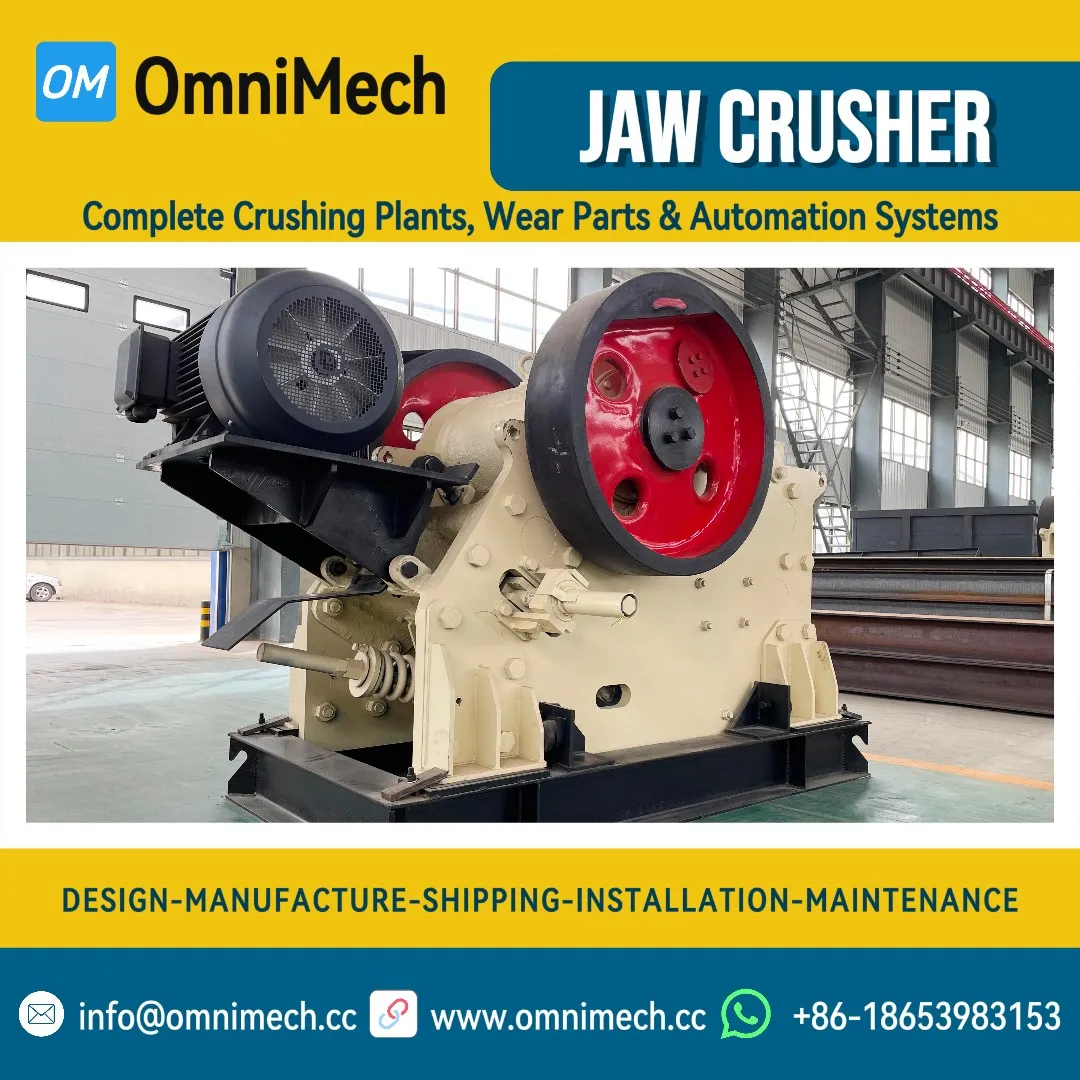
- High capacity + transport constraints or frequent relocation → C96 European Jaw Crusher, non-welded frame enables easy disassembly/transport, high-stroke design boosts capacity 20%-30%
Typical Application Scenarios and Model Recommendations
Scenario 1: Small Limestone Aggregate Line (30-60 t/h)
Recommended Configuration: PE-400×600 Jaw Crusher + PF-1010 Impact Crusher + Small vibrating screen
- Feed: Limestone ROM, max. 320 mm
- Primary crushing: PE-400×600, CSS 50-80 mm, discharge 60-100 mm
- Secondary crushing: PF-1010, discharge 0-25 mm
- Investment Advantage: PE-400×600 weighs only 6,500 kg with a 30 kW motor — minimal civil and electrical investment, the entry-level choice for small projects
Scenario 2: Small-to-Medium Limestone/Dolomite Aggregate Line (60-120 t/h)
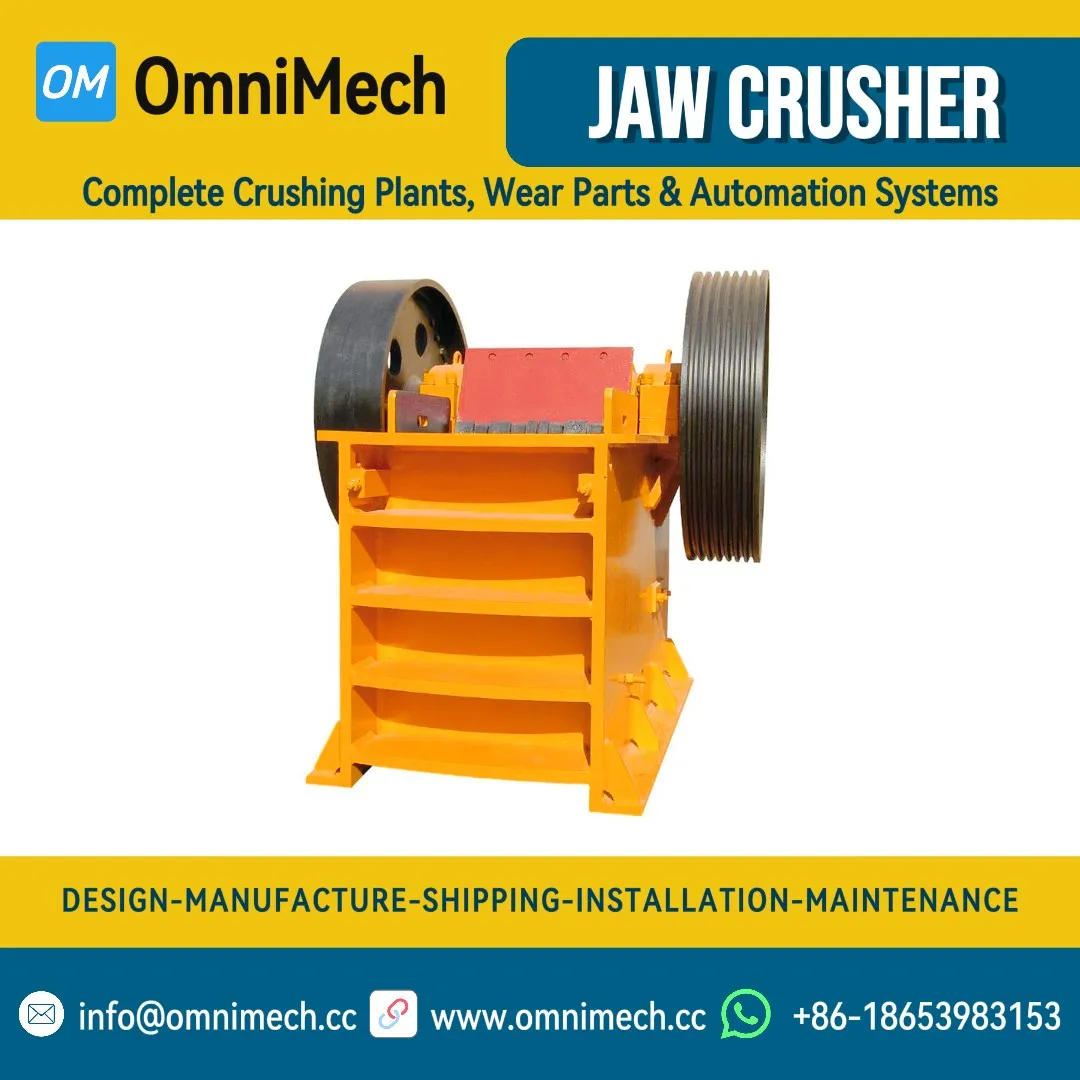
Recommended Configuration: PE-500×750 Jaw Crusher + PF-1210 Impact Crusher + 3YK1545 Vibrating Screen
- Feed: Limestone/dolomite, max. 425 mm
- Primary crushing: PE-500×750, CSS 60-90 mm, discharge 80-120 mm
- Secondary crushing: PF-1210, discharge 0-30 mm
- Investment Advantage: PE-500×750 is the “sweet spot” for 100 t/h limestone lines — the optimal balance of capacity and investment
Scenario 3: Medium Hard Rock Aggregate Line (100-200 t/h)
Recommended Configuration: PE-600×900 Jaw Crusher + GP220 Single-Cylinder Cone Crusher (C chamber) + 3YK1545 Vibrating Screen
- Feed: Granite/basalt, max. 500 mm
- Primary crushing: PE-600×900, CSS 80-120 mm, discharge P80 ≈ 150 mm
- Secondary crushing: GP220 C chamber, CSS 22-30 mm, discharge 0-40 mm
- Closed-circuit screening: 3YK1545, 31.5 mm screen aperture
- Investment Advantage: PE-600×900 has the world’s largest installed base among jaw crushers — the most mature spare parts supply chain and lowest operating costs
Scenario 4: Medium-to-Large Hard Rock Aggregate Line (180-300 t/h)
Recommended Configuration: PE-750×1060 Jaw Crusher + GP300 Single-Cylinder Cone Crusher (C chamber) + 3YK1860 Vibrating Screen
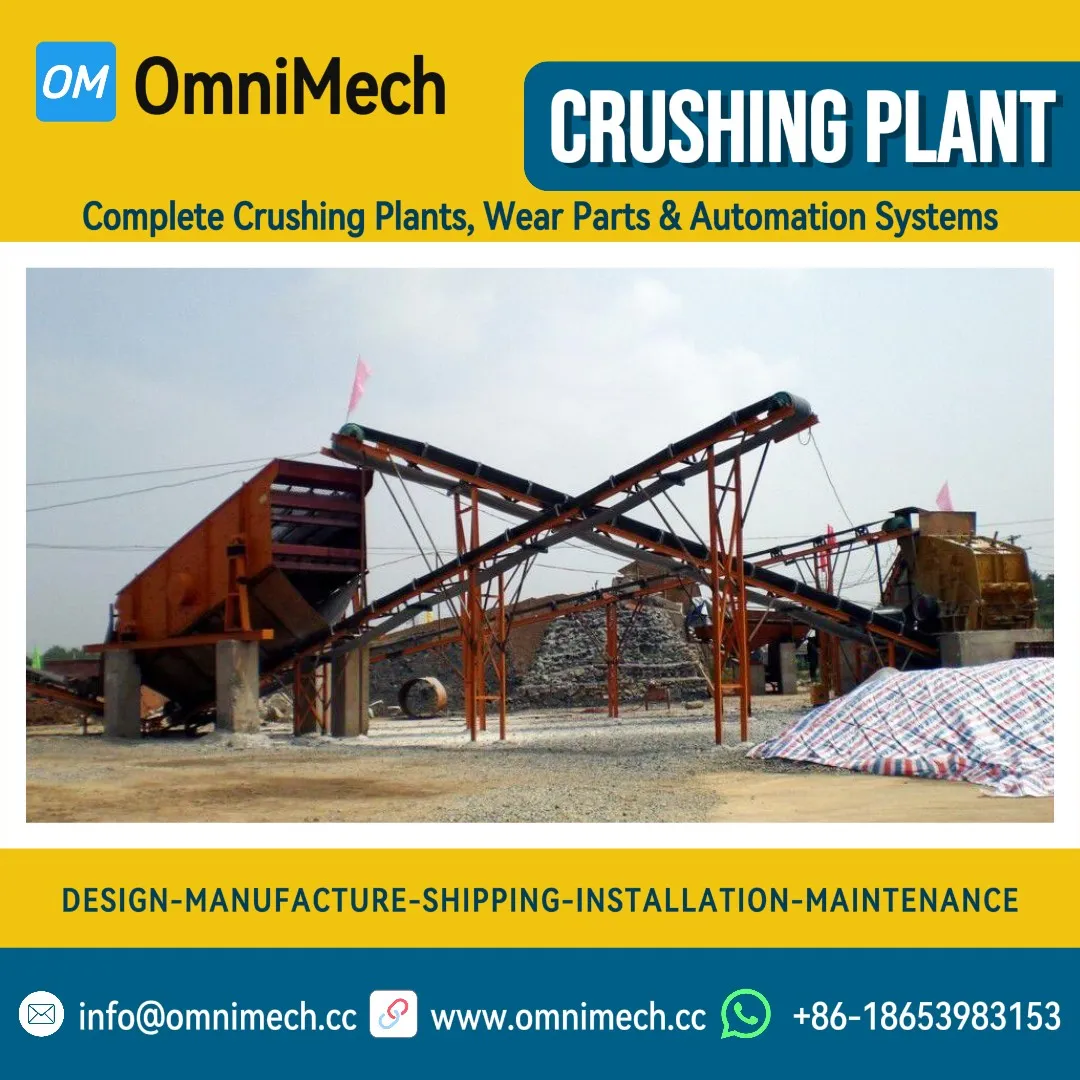
- Feed: Granite/basalt, max. 630 mm
- Primary crushing: PE-750×1060, CSS 130-160 mm, discharge P80 ≈ 200 mm
- Secondary crushing: GP300 C chamber, CSS 25-35 mm, discharge 0-45 mm
- Investment Advantage: PE-750×1060 with 110 kW motor and 29-ton total weight is the standard primary crusher for 200 t/h hard rock lines
Scenario 5: Large Mine and Aggregate Line (300-500 t/h)
Recommended Configuration: PE-900×1200 Jaw Crusher + GP330 Single-Cylinder Cone Crusher (EC chamber) + 2×3YK1860 Vibrating Screen
- Feed: High-hardness ore/rock, max. 750 mm
- Primary crushing: PE-900×1200, CSS 150-200 mm, discharge P80 ≈ 250 mm
- Secondary crushing: GP330 EC chamber, CSS 30-38 mm, discharge 0-55 mm
- Investment Advantage: PE-900×1200 is the flagship primary crusher for large mines — 52-ton machine weight ensures stable full-load operation
Scenario 6: Mega Mine (500-800 t/h)
Recommended Configuration: PE-1200×1500 Jaw Crusher + GP500 Single-Cylinder Cone Crusher (C chamber) + Multiple large vibrating screens
- Feed: Mega ROM blasted blocks, max. 1020 mm
- Primary crushing: PE-1200×1500, CSS 150-250 mm, discharge P80 ≈ 300 mm
- Secondary crushing: GP500 C chamber, CSS 25-38 mm, discharge 0-50 mm
- Investment Advantage: PE-1200×1500 is the ultimate primary crushing behemoth — 100.9-ton machine weight, 250 kW motor, engineered for 24/7 non-stop operation
Scenario 7: Secondary Fine Crushing (PEX Series)
Recommended Configuration: PE-600×900 Jaw Crusher + PEX-250×1200 Fine Jaw Crusher + Vibrating Screen
- Primary crusher discharge 80-120 mm feeds into PEX-250×1200
- PEX-250×1200, CSS 25-50 mm, discharge 30-65 mm
- Investment Advantage: When project budgets don’t support a cone crusher, the PE+PEX dual-jaw configuration is the lowest-cost hard rock crushing solution
Upgrade Option: For higher-capacity secondary fine crushing, the PEX-300×1300 High-Yield Fine Jaw Crusher features a 300×1300 mm extra-wide feed opening with capacity up to 30-105 t/h — the flagship model of the PEX series.
Selection Decision Flowchart
Start Selection
  │
  ├─ Determine Crushing Stage
  │    │
  │    ├─ Primary Crushing → PE Series
  │    └─ Secondary Fine Crushing → PEX Series
  │
  ├─ Primary Crushing Selection (PE Series)
  │    │
  │    ├─ Max. feed ≤ 320 mm, capacity ≤ 40 t/h? ──→ PE-400×600
  │    ├─ Max. feed ≤ 425 mm, capacity ≤ 100 t/h? ──→ PE-500×750
  │    ├─ Max. feed ≤ 500 mm, capacity ≤ 160 t/h? ──→ PE-600×900
  │    ├─ Max. feed ≤ 630 mm, capacity ≤ 242 t/h? ──→ PE-750×1060
  │    ├─ Max. feed ≤ 750 mm, capacity ≤ 500 t/h? ──→ PE-900×1200
  │    └─ Max. feed ≤ 1020 mm, capacity ≤ 800 t/h? ──→ PE-1200×1500
  │
  ├─ Secondary Fine Crushing Selection (PEX Series)
  │    │
  │    ├─ Capacity ≤ 61 t/h? ──→ PEX-250×1200
  │    └─ Capacity ≤ 105 t/h? ──→ PEX-300×1300
  │
  └─ Special Requirements
       │
       ├─ High capacity + transport constrained? ──→ C96 European Jaw
       └─ Hard rock secondary, need superior shape? ──→ Cone Crusher (see GP series)
Common Selection Mistakes
Mistake 1: “Jaw crushers handle anything — just pick any model”
While jaw crushers have the broadest material hardness tolerance, jaw plate consumption varies dramatically. A set of jaw plates may last 6-12 months on limestone but only 3-5 months on granite. You must select the appropriate jaw plate material based on material hardness, or operating costs will far exceed expectations.
Correct Approach: Hard rock (granite, iron ore) → Mn18Cr2/Mn22Cr2 high-manganese steel jaw plates. Soft rock (limestone, dolomite) → Mn13Cr2 is sufficient.
Mistake 2: “Bigger feed opening is always better”
An oversized jaw crusher running under light load leads to:
- Underutilized moving jaw stroke, poor crushing efficiency
- High proportion of no-load and low-load power consumption, increased specific energy
- Significantly higher equipment and civil works investment
Correct Approach: Select feed opening width at 1.2-1.5 times the actual maximum feed block size, and rated capacity at 1.15-1.25 times actual demand.
Mistake 3: “Set CSS to minimum for the finest output”
Excessively small CSS causes:
- Insufficient pass-through area at the chamber bottom, material over-grinding
- Accelerated bottom jaw plate wear, 30%-50% shorter service life
- Significant capacity drop with increased motor load
Correct Approach: CSS should balance discharge size requirements and downstream equipment feed needs — typically set at 0.6-0.8 times the downstream crusher’s maximum feed size.
Mistake 4: “Jaw crushers don’t need uniform feeding”
Jaw crushers are extremely sensitive to feed uniformity. Off-center feeding causes:
- One jaw plate wearing far faster than the other, 30%-50% shorter life
- Abnormal frame vibration, bearing overheating
- 15%-25% capacity reduction
Correct Approach: Install a vibrating feeder upstream for even, centered, continuous feeding, and use grizzly bars to pre-screen fines.
Mistake 5: “PEX can replace PE for primary crushing”
The PEX series has far less feed depth than the PE series and cannot effectively grip large blocks. Using PEX for primary crushing results in:
- Large blocks bridging at the feed opening
- Extremely low crushing efficiency — only 40%-60% of equivalent PE capacity
- Excessive wear on the upper portion of jaw plates
Correct Approach: Primary crushing must use the PE series. PEX series is exclusively for secondary fine crushing.
Summary and Recommendations
| Selection Factor | Key Criterion | Recommended Model |
|---|---|---|
| Primary crushing, capacity ≤ 40 t/h | Small line | PE-400×600 |
| Primary crushing, capacity ≤ 100 t/h | Small-to-medium line | PE-500×750 |
| Primary crushing, capacity ≤ 160 t/h | Medium line | PE-600×900 |
| Primary crushing, capacity ≤ 242 t/h | Medium-to-large line | PE-750×1060 |
| Primary crushing, capacity ≤ 500 t/h | Large line | PE-900×1200 |
| Primary crushing, capacity ≤ 800 t/h | Mega line | PE-1200×1500 |
| Secondary fine crushing, capacity ≤ 61 t/h | Small line | PEX-250×1200 |
| Secondary fine crushing, capacity ≤ 105 t/h | Medium line | PEX-300×1300 |
| High capacity + transport constrained | Special requirement | C96 European Jaw |
| Jaw plate material (hard rock) | High-impact conditions | Mn18Cr2 / Mn22Cr2 |
| Jaw plate material (soft rock) | Low-impact conditions | Mn13Cr2 |
Jaw crusher selection is ultimately about finding the optimal balance between feed size, capacity requirements, and operating costs. Choosing the right model and jaw plate material not only ensures full-line capacity and stable downstream operation, but can also save you tens of thousands in wear parts and electricity over a 3-5 year operating cycle.
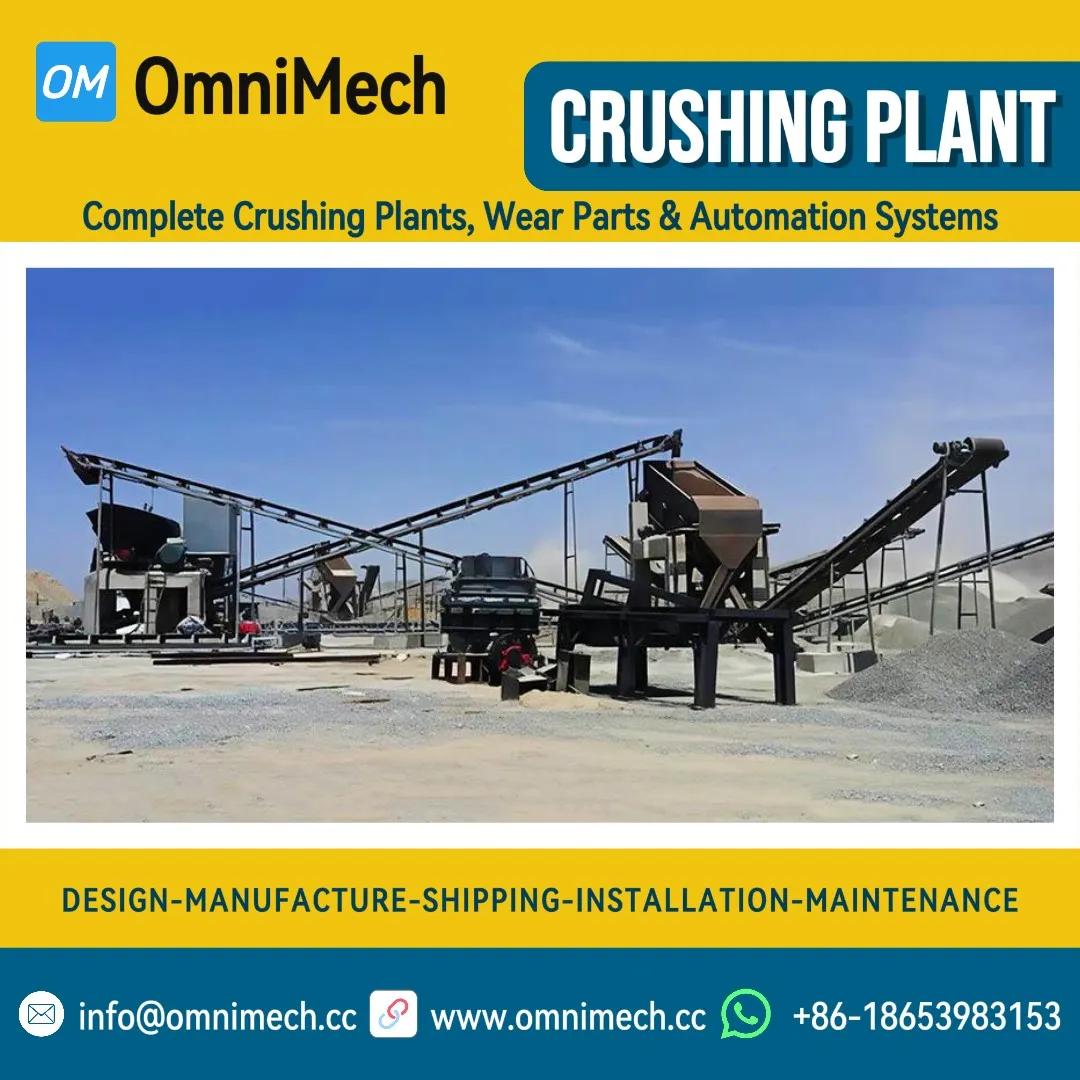
If you’re planning a new aggregate production line or upgrading an existing one, contact the OmniMech Engineering Team. We offer factory-direct pricing on the entire PE/PEX/C jaw crusher range and can custom-design your complete crushing and screening circuit.
👉 Request a Free Quote and Complete Circuit Design Our engineering team will provide professional selection advice and competitive pricing within 24 hours!